

The National Interest Foundation Newsletter
Issue 314, December 19, 2025
Welcome to our NIF Newsletter. In this week’s edition, we look into ISIS’s ambushing of U.S. troops in a surprise attack in Syria, examine the targeting of an Australian Jewish Hanukkah festival in a hate crime, and explore how researchers have documented that the Rapid Support Forces (RSF) are trying to cover up mass atrocities in El Fasher.
Editor: Bassam Tarbush
ISIS Ambushes U.S. Troops in a Surprise Attack in Syria

Three Americans stationed in Syria were recently killed in an ambush against U.S. and Syrian forces by a lone gunman affiliated with ISIS, who himself was then subsequently killed during the attack. The victims of the incident – which occurred in the town of Palmyra – were two U.S. soldiers and a civilian interpreter, while several other American and Syrian personnel were injured as well. This was the first fatal attack on U.S. forces in Syria since the fall of the Assad regime just over a year ago and marks the deadliest one against American personnel in the country since 2019. For analysts and experts, the incident underscores that despite the territorial defeat of ISIS in Syria, security vulnerabilities still exist as the extremist group’s sleeper cells remain active and possess the capability to launch isolated but potentially deadly attacks – particularly in remote desert areas in central Syria. As such, the United States and its partners including the new Syrian government continue to conduct regular counter-ISIS missions in an effort to prevent the resurgence of ISIS and bolster overall regional stability.
The assailant behind the attack was revealed to be a relatively new recruit to the Syrian internal security forces who had raised suspicions of having ties to extremist groups. Leaders of the Syrian internal security forces had become wary that there was an infiltrator leaking information to ISIS among them and thus recently began evaluating members in Syria’s Badia region. This probe raised alarms about the perpetrator and prompted officials to reassign him to guard duty away from leadership and coalition forces as a precautionary measure. At the same time, they continued to monitor him to determine if he was an active member of ISIS and to try to identify the network that he was communicating with. Unfortunately, however, the ambush was carried out last weekend against U.S. and Syrian officials as this process was unfolding. Following the attack, Syrian forces conducted sweeps in the Badia region against alleged ISIS cells and detained a handful of suspects, while both Syrian and U.S. officials pledged coordinated retaliation. At least three of the five individuals who were arrested by Syrian security forces are specifically suspected of being involved in and having links to the recent attack. Furthermore, the United States itself is conducting an active investigation into how the gunman who carried out the attack was able to infiltrate the meeting where the incident occurred.
The deadly ambush comes at a delicate and consequential time, as the U.S. military is in the midst of expanding its cooperation with Syrian security forces. Last month in November, during Syrian President Ahmed Al-Sharaa’s landmark visit to the White House, transitional Syrian authorities officially joined the U.S.-led global coalition to combat ISIS – becoming the 90th member country to do so. This has seen U.S. forces engage in intelligence sharing, logistical support, and conduct multiple joint field operations and patrols with the new Syrian government in an attempt to eliminate ISIS camps, target leaders, and destroy weapons caches. There have also been missions aimed at stabilizing areas formerly controlled by ISIS and securing critical infrastructure in order to prevent its recapture. Additionally, discussions are ongoing regarding the Syrian government assuming responsibility for ISIS detention centers in the northeast part of the country.
In light of the attack, both U.S. and Syrian officials have stated how it reinforces the need for and importance of their partnership against ISIS. U.S. Special Envoy for Syria Tom Barrack expressed that the incident “underscores, rather than undermines” the current cooperative efforts and noted that maintaining a limited U.S. presence empowers local partners to counter ISIS on the ground – preventing the need for wider American involvement and potential entanglement. Officials from the two countries also agreed and acknowledged that the ambush was specifically intended to disrupt the increasingly strengthening security ties. Therefore, it is critical that the attack not be allowed to derail cooperation and on the contrary, it should deepen the commitment to further bolstering coordination in counterterrorism and regional stability initiatives. An incident like this ultimately demonstrates the significance and relevance of the new Syrian government’s cooperative efforts with the United States and its international coalition to combat ISIS.
Australian Jewish Hanukkah Festival Targeted in a Hate Crime
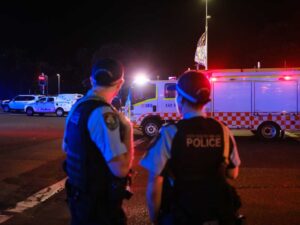
This past Sunday, a despicable hate crime targeting a Hanukkah celebration at Australia’s iconic Bondi Beach in Sydney left at least 15 people dead and around 40 others injured. The two perpetrators were a father and son duo who used long-barreled rifles to fire at victims from a footbridge overlooking the crowd of people. Australian authorities have declared the incident as an antisemitic terrorist attack inspired by ISIS. Following the attack, police found several firearms and improvised explosive devices in the assailants’ vehicle, which also contained homemade ISIS flags. In the aftermath of the hate crime – which marks the deadliest shooting in Australia in nearly three decades – the government has vowed to drastically tighten gun laws, including potential limits on the number of firearms that an individual can own and the enacting of stricter citizenship requirements for licenses.
Amid the abhorrent attack that unfolded, the brave and selfless actions of one bystander in particular – Ahmed Al-Ahmed – may have saved the lives of countless others. The 43-year-old fruit shop owner, a Syrian-born immigrant to Australia, has been hailed as a national hero after he physically intervened to stop the mass shooting by tackling and disarming one of the gunmen. Al-Ahmed risked his own life to do so and sustained multiple gunshot wounds in the process. Both Australian Prime Minister Anthony Albanese and New South Wales Premier Chris Minns have visited Al-Ahmed while he recovers in the hospital, praising him as a real-life hero who undoubtedly prevented even further loss of life in the attack. A GoFundMe campaign that was set up for Ahmed Al-Ahmed has raised over $1.5 million USD, with donations pouring in from all over the world.
Observers have noted that the mass shooting in Australia comes during a time that has seen a troubling increase in the frequency of hate crimes taking place around the world. In 2025, global reporting indicates that hate crimes including both antisemitic and Islamophobic attacks are on the rise. Projections suggest that the total number of these are on pace to reach all-time high levels, exceeding previous records last year. This has seen synagogues and mosques face more frequent threats, with advocacy groups citing a deteriorating climate of discrimination that has manifested in unprecedented numbers of complaints. Analysts have also wondered whether Israel’s increasingly criticized actions have endangered the security of Jews around the world and contributed to the escalation in hate crimes. Rights groups and activists have of course tried to emphasize the importance of distinguishing legitimate criticism of Israel’s policies from bigoted antisemitism. Regrettably, however, the uptick in incidents denotes that abhorrent individuals have sought to exploit the opportunity to wrongfully conflate these two as a means of carrying out their deplorable hate crimes. Many Jews around the world are themselves increasingly critical of Israel’s actions and policies, demonstrating the illogicality and wickedness of targeting Jews in hate crimes since there is no link between them and the behavior of a specific political entity.
The alarming rise in hate crimes across the board should be denounced in the strongest terms, rather than be politicized as some have attempted to do. Israeli Prime Minister Benjamin Netanyahu elicited significant backlash for his response to the deadly terrorist attack at Bondi Beach, with critics accusing him of leveraging the tragedy for political aims by trying to link Australian foreign policy decisions to the massacre. Netanyahu explicitly blamed the Australian government for the attack, claiming that the country’s recognition of a Palestinian state back in September was somehow a catalyst. This was firmly rejected by Australian officials who rightly expressed that the tragedy should not be shockingly exploited for seeking to score political points. International legal experts and Australian Jewish leaders were also quick to express their disgust at Netanyahu’s attempt to link principled human rights and social justice-related support for a Palestinian state to a terrorist hate crime. In fact, various commentators asserted that the Israeli government itself is one of the largest contributors to global insecurity and the worsening climate conducive to hate crimes given that it regularly weaponizes antisemitism in an attempt to silence valid criticism – a tactic that actually endangers Jewish communities by conflating them with Israel’s own widely condemned actions and policies.
Researchers Document That the RSF is Trying to Cover Up Mass Atrocities in El Fasher
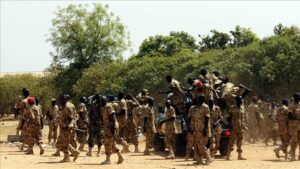
A new report by the Yale School of Public Health’s Humanitarian Research Lab (HRL) has documented the Rapid Support Forces’ (RSF) systematic multi-week campaign to erase evidence of mass atrocities committed in El Fasher. Since the RSF’s takeover of the city back in late October, the group has engaged in a massive operation to try and cover up its crimes through the burial, burning, and removal of human remains across the capital of North Darfur. Satellite imagery has confirmed a plethora of significant earth disturbances that are consistent with the presence of mass graves, including sites at a mosque and hospital, the latter of which the RSF repurposed as a detention facility. Yale’s HRL also tracked hundreds of clusters of objects that are deemed to be human remains, with activity and changes at these locations indicating continuing removal. Monitoring groups have estimated that between 1,500 and 2,000 civilians were killed in the first days after El Fasher fell, and Yale researchers now assess that the total number of bodies disposed of likely reaches the tens of thousands.
While precise casualty figures in El Fasher are difficult to verify due to the communications blackout and ongoing violence, it is believed that an appalling at least 60,000 civilians have been killed or massacred since the RSF seized the city in late October. Furthermore, around 250,000 civilians were trapped in the city at the time of its fall and the HRL’s recent findings suggest that the vast majority of these individuals may have been killed by the RSF, died, or remain in hiding. On top of all of this, El Fasher was officially declared to be suffering from famine in the preceding months, as hundreds of thousands face starvation as a result of the prolonged 18-month siege on the city. In order to document evidence, HRL researchers and investigators utilized a mix of high-resolution satellite imagery, thermal data, and open-source intelligence to shed light on the scale of the RSF atrocities. Images taken showed extensive reddish discoloration consistent with large-scale blood pooling, while satellite sensors detected thermal anomalies and instances of burning objects signifying efforts to burn remains and destroy forensic evidence. HRL was able to geolocate videos as well that were posted by RSF members which showed soldiers shooting civilians attempting to flee the city.
The horrific RSF atrocities that have been documented include execution-style killings, sexual violence, the obstruction of humanitarian aid, and the targeting of medical facilities. The group has carried out systematic house-to-house raids, sexual assaults, and executions of those sheltering in neighborhoods or attempting to flee the violence. They have also maintained a blockade on food, medicine, and other humanitarian aid, while destroying or severely damaging El Fasher’s last functioning medical facilities. A recent United Nations report released earlier this week even documented the heinous killing of over 1,000 civilians in a nearby displacement camp as a part of the RSF’s ruthless siege on the region leading up to its takeover of El Fasher in October. One of the troubling elements surrounding the circumstances in the area is the fact that more than 150,000 residents remain unaccounted for in the time since then – fueling fears that the actual death toll could be much higher than what is currently known.
As the RSF carries out a systematic campaign to hide evidence of its mass atrocities in El Fasher, the current status of the city has been described as a ghost town. In addition to proof of the RSF efforts to cover up its deplorable crimes, satellite imagery from Yale researchers and others have shown a complete lack of civilian activity with tens of thousands believed to be trapped and hiding under horrific conditions. Last week, the European Union launched an emergency air bridge to deliver supplies while United Nations aid agencies announced a tentative deal to access El Fasher, however safety assessments are still ongoing and desperately needed UN aid convoys have not yet entered the city. With the RSF maintaining control in El Fasher, heavy fighting has recently shifted to the nearby Kordofan region. Human rights officials have warned that the spread of fighting into Kordofan risks creating a similar situation to what has unfolded in El Fasher.

