

The National Interest Foundation Newsletter
Issue 322, February 20, 2026
Welcome to our NIF Newsletter. In this week’s edition, we discuss U.S. President Donald Trump’s Gaza Board of Peace meeting without anyone from Gaza, explore the core issues shaping voter perceptions in the lead-up to the 2026 midterm elections, examine the lingering unease following U.S. Secretary of State Marco Rubio’s Munich Security Conference speech, and look into how mounting human rights concerns have driven public support for Immigration and Customs Enforcement (ICE) to a record low.
Editor: Bassam Tarbush
Trump’s Gaza Board of Peace Meets Without Anyone from Gaza
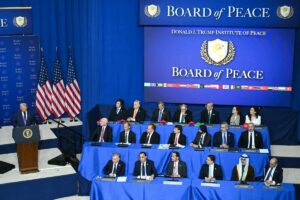
When the Trump administration announced the creation of its Board of Peace as a forum to chart a path forward for Gaza, the objective was clear. The board was meant to gather global leaders, humanitarian experts, and economic visionaries to propose a reconstruction framework after more than two years of conflict and devastation. However, the first substantive meetings revealed a glaring contradiction. Notably, voices from Gaza were entirely absent from the opening sessions, even though the board is nominally focused on the future of the Palestinian territory and its people.
Instead of centering on those most affected by the devastation and its repercussions in order to maximize the prospects of genuine and lasting peace, the board was set up in a highly transactional manner, requiring contributions of at least $1 billion and welcoming political figures and business leaders in what has been justifiably criticized as a “business-like” approach and institutional structure. Analysts have pointed to how this method wrongfully treats vital humanitarian, diplomatic, and reconstruction efforts like corporate real estate projects, rather than as complex geopolitical issues which require international consensus. This “pay-to-join” membership structure has been denounced for creating a system whereby influence is bought rather than earned through diplomacy. Furthermore, the designation of U.S. President Donald Trump as permanent chairman with broad and unchecked authority turns what should be an independent global peace initiative into a personalized and transactional one which favors his allies and undermines impartial international norms. For this reason, the Board of Peace has faced scrutiny for its “colonialist” structure, intending to oversee the governance of Gaza while excluding Palestinian representation. At this week’s first Board of Peace meeting, there were no delegates from Gaza itself – whether these be civil society actors, humanitarian coordinators, or ordinary citizens who have the most stake in its future.
All of this is why major U.S. allies including France, Germany, and the United Kingdom have declined to join the Board of Peace – expressing serious concerns over its structure and the attempts to supplant and sideline established international organizations and protocols. Additionally, revered global figures and religious leaders have also declined to take part. This week, Pope Leo XIV – who leads a worldwide community of more than 1.2 billion Catholics – became one of the latest prominent individuals to reject involvement in the board. Other notable figures known for advocating humanitarian access and human rights were also not present in the opening meeting earlier this week.
A gathering meant to organize the reconstruction of a territory where more than two million people live should call for representation from that population. Gaza remains one of the most densely populated areas in the world, with more than 70% of its residents under the age of 25. Large portions of the region’s infrastructure have been severely damaged or destroyed, and millions depend on humanitarian aid for basic survival. Yet not one voice from within Gaza was heard during the opening talks. This absence raised questions about for whom the board is truly serving and who gets to define the priorities for recovery.
Many attending delegates represent countries that have strategic economic interests in the Middle East or longstanding political relationships with major Western powers. Some of these governments have been criticized by human rights organizations for their own records on civil liberties and press freedoms. The presence of such actors has fueled concern that discussions may center on investment opportunities and geopolitical alliances rather than urgent humanitarian needs.
Supporters of the board have argued that high-level engagement from global capitals is necessary to marshal the financial resources needed for reconstruction. In briefing materials, planners cited the immense scale of the task. Estimates from international aid organizations suggest that reconstruction in Gaza could require tens of billions of dollars, well beyond what local economies could generate on their own. Securing pledges from major donors is a legitimate goal for any international reconstruction effort. But without direct involvement from the people affected, the question remains whether such pledges will translate into outcomes that meet the real priorities on the ground.
Attendees appear to have been chosen based on diplomatic alignment rather than human impact. Critics worry that due to this, the board may be more about formalizing geopolitical relationships under the banner of reconstruction than about genuinely addressing the long-term needs of Palestinians in Gaza.
Even among invited guests there was ambivalence. Some Western lawmakers who have traditionally played roles in foreign aid policy expressed reservations about the board’s focus and membership list. Observers noted that in a forum where moral authority and humanitarian urgency should dominate the agenda, geopolitics instead took center stage. In 2025, a global survey of public opinion found that a majority of people in both European and North American countries saw the plight of civilians in Gaza as a major humanitarian issue. That same survey also indicated skepticism about international political solutions that do not prioritize immediate relief and reconstruction led by local stakeholders.
Core Issues Shaping Voter Perceptions in the Lead-Up to the 2026 Midterm Elections
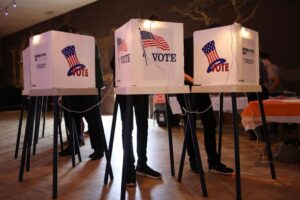
As Americans get ready for the 2026 midterm elections, several notable issues stand out in early conversations about what will motivate turnout and influence choices at the ballot box. With less than nine months until Election Day, analysts are beginning to sketch out early forecasts for the balance of power in Congress, while polling data provides insight into which issues are driving voter intensity. Forecasts regarding control of the U.S. House and U.S. Senate suggest that both chambers are likely to be highly competitive. Historically, the party holding the White House faces structural headwinds in midterm elections. Since World War II, the president’s party has lost House seats in all but a handful of midterms, with the average loss exceeding 20 seats. Republicans currently defend a narrow House majority, meaning even a small shift in competitive suburban districts could alter overall control. Several nonpartisan election analysts rate more than two dozen House races as toss-ups or leaning only slightly toward one party, underscoring how tight the races are expected to be.
The Senate map presents a different but equally delicate landscape. A limited number of truly competitive seats could determine majority control, particularly in purple and narrowly divided states. Early modeling suggests that if the national environment tilts even slightly toward Democrats, Senate control could shift by one or two seats. Conversely, if Republican turnout outpaces expectations in battleground states, the current alignment could hold or expand. At this stage, economic conditions and presidential approval ratings are widely viewed as the most significant variables influencing these projections.
Across multiple national surveys conducted this winter, between 35 and 45 percent of voters identify inflation or the cost of living as the single most important issue facing the country. When respondents are allowed to select multiple concerns, more than 70 percent list inflation as a major worry. By comparison, immigration typically registers in the mid 20 percent range as a top issue, while foreign policy crises often poll in the teens unless a specific escalation occurs. These numbers suggest that affordability remains the dominant lens through which voters are evaluating national leadership.
Across demographic groups, economic worries are dominating the early 2026 agenda for voters. Concerns about inflation and the rising cost of everyday life continue to be the most widely shared priority. Recent polling shows that many Americans place inflation and cost-of-living stress at the very top of their issue list, with more respondents naming it their most important concern than any other topic. This includes not just prices at the grocery store or gas pump, but basic expenses like housing costs and utilities. Latino voters in particular place cost pressures high on their list of concerns, with survey data showing roughly six in ten identifying the issue of inflation as their primary economic concern.
When voters feel squeezed financially, it tends to bleed into their views of leadership and accountability. Performance on inflation and economic stability has become closely tied to how people evaluate those in power. In several recent surveys, a notable share of people express dissatisfaction with how the government is managing prices and the economy more broadly, with around half describing current economic conditions as “poor” and nearly as many saying they feel financially worse off than a year ago. Presidential approval numbers mirror these perceptions, hovering in the low to mid 40 percent range nationally, with economic approval ratings often even several points lower.
A large majority of adults also report worrying about being able to afford health care for themselves and their families, with surveys showing roughly three quarters expressing concern about unexpected medical bills. Around 45 percent say they have delayed or skipped some form of medical care in the past year due to cost. Polling finds that health care costs now rank above most other living expenses in terms of voter worry, even ahead of rent or mortgage payments in some measures. More than four in ten people say that the cost of health care will influence both whether they vote and who they support in the midterms. That influence cuts across party lines, though priorities differ. Republican voters tend to cite premium costs and regulatory burdens as their top concerns, while Democratic voters more frequently point to prescription drug pricing and coverage protections. Independents consistently rank health care affordability among their top three voting considerations.
For some voters, concerns about foreign policy-related topics involving countries like Iran and Venezuela, as well as the state of affairs in the Middle East influence their view of national leadership and global stability. Polling suggests that roughly one third of voters say foreign policy will be very important to their vote, though this number rises among older voters and veterans. Approval of the administration’s handling of foreign affairs tends to track closely with partisan identification, with these figures often slightly below overall job rating numbers. Many are also now pushing for greater openness around high-profile investigations and document releases, including the ongoing public interest in files associated with the case of deceased sex offender Jeffrey Epstein. While this issue ranks lower in overall salience, surveys show that more than 60 percent of voters believe the federal government is not being sufficiently transparent in its release process surrounding the Epstein files. Among independent voters, trust in federal institutions has fallen below 30 percent in some measures, suggesting that transparency debates could influence turnout and overall race outcomes – especially in elections that are anticipated to have particularly tight margins.
Current polling and historical patterns suggest that we will see yet another competitive midterm election season this year. If inflation perceptions improve and approval ratings rise, the president’s party could mitigate typical midterm losses. However, if they do not, many anticipate significant Democratic gains in both houses of Congress come November. That said, even small swings in suburban districts and battleground states could produce measurable shifts in the Congressional balance of power. With affordability, health care, foreign policy, and institutional trust all in play, the months ahead will be critical in determining whether 2026 follows historical precedent or defies it.
Lingering Unease Following Rubio’s Munich Security Conference Speech

After U.S. Vice President JD Vance’s controversial speech last year at the Munich Security Conference, European leaders were on edge in anticipation of U.S. Secretary of State Marco Rubio’s remarks at this year’s latest iteration. Vance’s 2025 speech was widely derided for its harsh and confrontational tone, as well as the hypocrisies surrounding his European freedom of speech and “threat from within” suppression of dissent criticisms given the Trump administration’s own actions in these areas. Analysts noted that the speech served as a significant questioning of transatlantic relations and cooperation, prompting many European leaders to call for greater strategic independence from the United States. This year, observers contended that Rubio’s speech struck a softer tone – quelling some of the anxiety surrounding the state of U.S.-European ties – however it still elicited a degree of concern due to it containing some of the same uncompromising Trump narratives related to areas like “civilizational erasure” via mass migration, U.S. isolationism, and the current administration’s preparation to act alone on the global stage.
Even with the softer tone of Rubio’s speech compared to Vance’s last year, a lingering sense of caution persists among some European officials who still feel that they must pursue a greater level of strategic independence. Experts have tried to classify Rubio’s remarks as ones which intended to affirm the continuation of transatlantic relations, but while at the same time making clear that U.S. interests under the Trump administration are evolving. Regarding the North Atlantic Treaty Organization (NATO), for example, Rubio appeared to be signaling that the alliance must adapt to shifting strategies and priorities. President Trump’s repeated contention that Europe should rely less on the United States for defense purposes has long sparked substantial apprehension that the U.S. is scaling back its support. A large-scale detachment from these ties remains unlikely, but it does appear that the United States under the Trump administration is edging away from Europe. Notable figures such as President of the European Commission Ursula von der Leyen agree that Europe relies too heavily on the U.S. for defense purposes. Furthermore, United Kingdom Prime Minister Keir Starmer mentioned at the security conference that the ability to preserve NATO the way it is needed for years to come can only occur if the European dimension is strengthened.
Rubio’s underlying messages echoed much of the Trump administration’s longstanding policy positions and stances. The Secretary of State reiterated that Europe must assume more responsibility for its own defense, stating that while the U.S. prefers to act together, it is prepared to act alone if necessary. He warned that “mass migration” is a threat to the “cohesion of our societies,” urging European nations to do more to “regain control of their borders.” Rubio also argued for a more transactional and “pragmatic” approach to the transatlantic alliance, emphasizing “reciprocity” over traditional open-ended security guarantees. It is evident that many European leaders have already perceived a sense that the U.S. under the Trump administration is “pulling away” from these traditional guarantees, as various countries have increased their defense spending and voiced concerns over the U.S. becoming a less reliable partner. During the one-plus terms of the Trump administration, the United States has withdrawn from the Iran nuclear deal and the Paris Climate Agreement – both of which were moves that dismayed much of Europe. The ongoing Ukraine War also remains a primary issue for European leaders, with concern over the belief that the Trump administration has put pressure on Ukraine to accept terms that would benefit Russia more so than Kyiv. In contrast, the majority of Europe views Russia as the aggressor and the entity which should be forced to concede to terms that are much more favorable towards Ukraine.
Additionally, Trump’s pursuit of Greenland and the shift towards restricting immigration and downplaying climate initiatives represent stances that Europe does not necessarily share. The idea of acquiring Greenland, a territory of Denmark, was perceived by many European leaders as dismissive of sovereignty norms. For various European governments, proposals such as this suggested a more nationalistic posture. On immigration, while Europe remains divided internally on the issue, many governments still think that it is a humanitarian issue requiring multilateral cooperation and assistance as opposed to the viewpoint of the U.S. under Trump which reflects an emphasis on other priorities over cooperation. With respect to climate change policy, the European Union (EU) plays a central role in implementing environmental regulations and changes. Thus, there is large-scale agreement on long-term strategies and investments in green energy. As such, the EU interprets Trump skepticism on climate change policy as a shift away from the idea of shared global responsibility. For many observers, climate cooperation is not merely environmental policy but also a vital commitment to international stability and prosperity. All of this is why Rubio’s speech highlighted the U.S. shift under Trump, even if it was disguised with a softer tone and more reassuring language than Vance’s 2025 remarks. Still, other U.S. officials who spoke at the recent conference – including California Governor Gavin Newsom – sought to stress their belief in a climate-focused message and both remind and assure traditional European allies that “Trump is temporary” and that in the bigger picture, the U.S. will remain a reliable and stable partner in the coming years.
Mounting Human Rights Concerns Drive Public Support for ICE to a Record Low

Public sentiment across the United States towards Immigration and Customs Enforcement (ICE) is currently at an all-time low, driven by overwhelming opposition to multiple high-profile fatal shootings, the agency’s brutal tactics, and grave human rights concerns. The recent killings of Renee Good and Alex Pretti in Minneapolis sparked widespread outrage, with over 50,000 people taking part in protests throughout the city alone following the shootings, in addition to more than 700 businesses closing in solidarity with the anti-ICE protests. On top of ICE’s aggressive militarized tactics and valid humanitarian concerns regarding their conduct, the ambiguous rules and broad criteria given to the agency when making stops and a lack of accountability for its violations have eroded Americans’ trust. A February 2026 poll found that roughly 60%-65% of Americans disapprove of the job that ICE is doing compared to only 30%-33% who approve. These percentages are significantly polarized, with around 73% of Republicans approving ICE’s performance compared to a whopping 91% of Democrats who disapprove. However, perhaps most telling is the surge in disapproval among independents, with close to 70% now viewing ICE’s actions as going too far. Furthermore, around 62% of Americans now believe that ICE’s actions are making the country less safe. In totality, these unfavorable views have steadily risen since Trump’s first presidential term – as ICE has notably expanded, becoming increasingly ubiquitous across the public domain and social media.
One of the biggest drivers of mistrust in the public sphere comes from the unclear rules and standards ICE agents follow. For instance, immigration agents are legally allowed to stop a vehicle if it is violating federal law, but they must have reasonable suspicion. However, the Supreme Court ruling back in September 2025 granted agents permission to use apparent ethnicity or race as a relevant factor to stop people. This caused a lot of confusion, as many were under the impression that racial profiling is illegal under the Fourth Amendment. The decision also gave ICE agents permission to look into someone if they speak Spanish or English with an accent, or are working specific jobs, like construction or landscaping.
While this decision was not final, critics argue that it legalizes and encourages racial profiling, endangering individuals, particularly in the Latino Community, even if they are legal citizens. Such is the case of George Retes, an honorably discharged veteran and American citizen, who was pepper-sprayed, forcefully apprehended, and detained for three days. ICE agents also used tear gas and broke his windshield in the process of his arrest. After Retes was released, the Department of Homeland Security (DHS) accused him of assault, issuing a statement claiming he became violent and refused to comply with officers. However, Retes strongly refuted this claim and has yet to be officially charged with anything. There have been similar instances whereby U.S. citizens have been detained and later accused of obstructing or assaulting law enforcement officers, but investigations conclude that the majority of these charges are not filed or dismissed, and in some cases, have even been shown to be false statements. This decreases the amount of trust between the public and ICE because it creates fear that American citizens will be unlawfully detained, not have the right to due process, and then be wrongfully accused of assault or other crimes.
DHS and the Trump administration’s findings largely contrast with that of various media sources and court rulings, which has also increased the amount of overall skepticism and distrust surrounding ICE. While DHS claims false narratives – including regarding the high-profile recent killings of Good and Pretti which are easily refutable through captured video evidence – reports and accounts show that ICE agents are smashing car windows, entering homes without a judicial warrant, and using excessive force to carry out their mission. It is therefore completely fair and understandable that when official government statements directly conflict with legal findings, personal experiences, and impartial reporting, public trust and confidence in agencies like ICE is bound to erode. This in turn reinforces the need for clear standards and strong oversight.

