
The National Interest Foundation Newsletter
Issue 312, December 5, 2025
Welcome to our NIF Newsletter. In this week’s edition, we delve into how Israel is sabotaging the transition to phase two in the Gaza ceasefire plan, examine the attack against National Guard members and its impact on asylum seekers, and provide analysis regarding U.S. military buildup in the Caribbean and the increased chance of an invasion of Venezuela.
Editor: Bassam Tarbush
How Israel is Sabotaging the Transition to Phase Two in the Gaza Ceasefire Plan
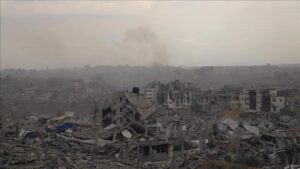
International bodies, mediators, and other impartial entities have criticized Israel’s deliberate attempts to sabotage the transition to phase two of the Gaza ceasefire plan. Israel has done this through continued military strikes, the obstruction of humanitarian aid, and a refusal to take part in negotiations over the agreed-upon full withdrawal of its troops from Gaza since the initiation of the ceasefire deal. Observers have expressed understandable concern at Israel’s actions, urging the international community to ensure Israel’s abidance by the terms of the Gaza ceasefire plan. There is also unease that Israel could be using the issue of the one remaining deceased hostage return as a pretext for sabotaging and delaying the transition to phase two. Mediators like Qatar have stated that Israel should not be allowed to stall and obstruct the implementation of the agreement under the guise of this, particularly considering Hamas’ return of all other living and deceased hostages under the terms of the deal in addition to the widespread acknowledgement that recovery of the bodies has been hindered by the extensive destruction of Gaza.
With its obstruction of the transition to phase two in the Gaza ceasefire plan, Israel is violating the core stipulations of the agreement. The deal required Israel to withdraw its forces to specific lines in phase one and then to further retreated positions during the second stage. Despite this, UN experts and other international groups have outlined hundreds of Israeli breaches since the ceasefire began. These have included airstrikes, artillery shelling, and direct shootings which have killed more than 300 Palestinian civilians. Israel has continued to block the flow of humanitarian aid into Gaza, in defiance of one of the core provisions of the agreement. Additionally, Israeli forces have raided residential areas beyond the agreed-upon withdrawal lines and shot at civilians attempting to return to their homes in northern Gaza. They have also sought to entrench their presence in parts of Gaza and the Philadelphi corridor, in essence aimed at dividing the Palestinian territory and signaling their desire for indefinite occupation.
For many observers, it is clear that American pressure on Israel is necessary in order to make progress regarding the transition to phase two of the Gaza ceasefire plan. In fact, it is believed that the Netanyahu government has no interest in progress on the implementation of the plan so long as there is no real international pressure – mainly from the United States. The U.S. holds significant leverage over Israel, with the former being viewed as the only outside power that is capable of compelling Israel to abide by the terms of the agreement and make concerted efforts towards the second phase. Furthermore, U.S. pressure is seen as being crucial to securing commitments from regional states to participate in the International Stabilization Force (ISF) called for in the plan, which is aimed at maintaining security in Gaza and helping to facilitate a political transition. While the Trump administration has touted its success in brokering phase one of the ceasefire, the continued Israeli violations and inability to progress towards the second stage have lessened the chances of long-term implementation and left the United States needing to remain engaged and use its leverage to prevent the process from collapsing.
The plan to deploy international forces to Gaza as a part of the ISF outlined in the ceasefire agreement is currently facing substantial obstacles as well. Several countries that were being relied upon to do so have grown increasingly weary that their troops will be perceived as an occupation force acting on behalf of Israel to try to disarm Hamas rather than as a neutral peacekeeping mission. The lack of clarity regarding the ISF’s specific mandate, legal status, and scope of operations has left many nations hesitant to take part on the type of scale that was anticipated. Additionally, the continuation of Israeli military offensives in Gaza has prompted some countries to condition their potential participation in the ISF on a complete halt to this – viewing deployment under the current circumstances as too dangerous for an international contingent. All of this has led a host of countries to scale back their commitments, presenting a further challenge to the prospect of transitioning to phase two of the Gaza ceasefire plan.
The Attack Against National Guard Members and Its Impact on Asylum Seekers
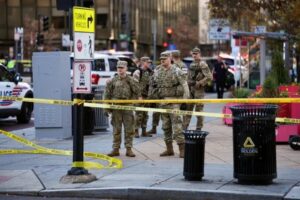
Last week’s heinous attack against two National Guard members in Washington D.C. near the White House has raised concern regarding the negative impact it will have on those seeking asylum in the United States. The assault, carried out by an individual who moved to the United States from Afghanistan several years ago under a program that offered special immigration protections for those who had worked with U.S. forces in the latter country, has prompted the Trump administration to implement a wide range of strict immigration restrictions – including an indefinite halt to all asylum decisions. Regrettably, this reaction to the attack is due to have a significant and detrimental effect on blameless asylum seekers of all nationalities, especially those from Afghanistan, due to the profile of the assailant. Human rights advocates have criticized the sweeping response to the incident, pointing out that they amount to a form of unjust collective punishment for the actions of one mere individual.
The pause regarding asylum decisions creates immense uncertainty for hundreds of thousands of people fleeing persecution, many of whom have already been waiting years for their cases to be adjudicated due to existing backlogs. Unfortunately, some of the most immediate negative impact is on Afghans who risked their lives to support U.S. forces and are now stranded in dangerous circumstances or in legal limbo within the United States while seeking permanent resident status or reunification with their families. The recent Trump administration actions on asylum and immigration following the incident have halted application processing, cancelled appointments, and placed large numbers of inculpable individuals with pending cases or existing status in uncertain situations. The changes are poised to potentially upend the status of as many as 2.2 million people with pending asylum cases within the United States.
It is estimated that approximately 50,000 people who gained asylum under the previous Biden administration could now have their status reviewed or threatened. Additionally, more than 230,000 refugees who entered the United States between January of 2021 and February of 2025 are subject to a review of their status, while the processing of their applications for permanent residence has been halted too. Furthermore, the Trump administration has summarily stripped Temporary Protected Status (TPS) from nearly 1 million people and revoked hundreds of thousands of grants of humanitarian parole, placing these individuals at risk of deportation. The administration also ordered a “full-scale, rigorous reexamination” of all green cards for individuals from 19 countries classified as “high-risk.” This affects several million people, including large populations from nations like Iran, Somalia, Haiti, Afghanistan, Libya, Sudan, Yemen, Venezuela, and Cuba – many of whom have lived legally in the United States for years. These individuals face the prospect of arbitrary revocation of legal status, something that would make them targets for deportation without any evidence of wrongdoing. The overall impact of these policy changes has included the indefinite suspension of asylum decisions as well – a troubling development given the often times urgent and pressing circumstances surrounding these cases.
Human rights advocates have highlighted that the Trump administration’s measures in the aftermath of last week’s attack are unwarranted and use the tragedy as a pretext to smear and target a large group of already vulnerable people. Many of those negatively impacted are fleeing persecution and violence, and have undergone rigorous levels of vetting during their process of seeking asylum in the United States. The isolated actions of one individual should not define or disparage an entire community, and it is wrong to try and undermine legal pathways for the overwhelming majority of asylum seekers who are simply seeking safety and a better life. Halting dire asylum decisions and expanding expedited removals without a court hearing deprives individuals of their right to apply for humanitarian protection and due process. The measures taken by the Trump administration are seen as a form of weaponizing the immigration system for political means, using inflammatory language against immigrants to stoke fear and scapegoat. Ultimately, the response to what was a single criminal attack was disproportionately broad and is likely to now have far-reaching negative ramifications on those who deserve no culpability whatsoever for the assailant’s actions.
U.S. Military Buildup in the Caribbean and the Increased Chance of an Invasion of Venezuela
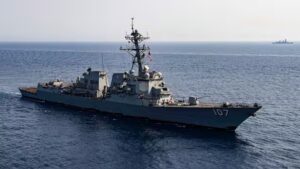
The United States has amassed its largest military presence in the Caribbean in decades, with actions including numerous strikes on alleged drug-smuggling boats over the preceding months. This and escalated recent tensions between the United States and Venezuela have ramped up concerns regarding the potential of direct military conflict. U.S. President Trump has issued public warnings and threats of possible land strikes, while Venezuelan dictator Nicolás Maduro has responded with defiant rhetoric and military drills. The policies and actions under the Trump administration represent a significant shift from previous U.S. counternarcotics operations in the region, which typically involved interdiction and prosecution of suspects by law enforcement agencies rather than lethal military force. The legality and justification for these strikes have been widely questioned by international law experts, UN officials, and some members of U.S. Congress – sparking controversy and calls for reviews and restraint in the face of what continues to be a highly volatile situation.
While a full-scale invasion is considered unlikely by many experts due to the current troop levels being insufficient for this, the expansive U.S. military buildup significantly increases the chance of targeted airstrikes or limited military actions against Venezuelan land targets or government figures. The recent U.S. deployment in the Caribbean is noteworthy and consists of over 15,000 military personnel including approximately 5,000 sailors aboard the USS Gerald R. Ford aircraft carrier and its strike group, as well as an estimated 5,000 personnel based in Puerto Rico. There are believed to be around 11 U.S. warships in the area, with air assets such as F-35 fighter jets, MQ-9 drones, and various Marine helicopters. Additionally, the former Roosevelt Roads Naval Station in Puerto Rico has been reopened and is being used as a staging ground for operations. All told, there is a much larger force than needed for routine counternarcotics operations, leading analysts to conclude that there may be preparations for potential U.S. land-based attacks in Venezuela.
The heightened tensions and military buildup have prompted various U.S. lawmakers to voice bipartisan concerns and introduce War Powers resolutions in both the Senate and the House to try to block unauthorized military action in or against Venezuela. The resolutions have both Democratic and Republican sponsors including U.S. Senator Tim Kaine (D-VA), U.S. Senator Rand Paul (R-KY), U.S. Representative Ro Khanna (D-CA), U.S. Representative Joaquin Castro (D-TX), and U.S. Representative Thomas Massie (R-KY), among others. These efforts seek to uphold the constitutional requirement for congressional authorization of military force, arguing that President Trump does not have the unilateral means to initiate open-ended hostilities. They are aimed at preventing the Trump administration from entering what most fear would be another endless war or pursuing reckless regime change in Venezuela without a formal declaration or specific authorization for the use of military force from Congress.
In conjunction with this, Trump administration officials have come under fire for the nature of their military strikes against alleged drug-smuggling boats in the Caribbean – facing accusations of potential war crimes and extrajudicial killings. There has been particular controversy and scrutiny surrounding follow-up double-tap strikes which killed two survivors of an initial boat strike back in September. Following the first missile strike on a vessel, two people were found to have survived and were clinging to the wreckage when a second strike was then ordered to “kill everybody,” in compliance with a reported directive from U.S. Defense Secretary Pete Hegseth. Legal experts and some members of Congress argue that the follow-up strike on survivors who no longer posed a threat constitutes a potential war crime and an extrajudicial killing under international law. In fact, the U.S. Department of Defense’s own manual lists attacking a shipwreck as an impermissible action. The House and Senate Armed Services Committees are conducting bipartisan oversight over the actions, while the Trump administration has tried to distance Hegseth from accountability by naming Admiral Frank M. Bradley as the officer that “directed the engagement” despite a Washington Post report that Hegseth was the one who gave the order.
Amid the military buildup, heightened U.S.-Venezuela tensions, and scrutinized strikes, President Trump has added to the concern regarding potential further escalations by indicating that land operations in Venezuela may begin soon. He has also claimed that American intelligence agencies have extensively mapped out the drug networks’ activities and are aware of the locations of key sites. Analysts and experts largely agree that a broader U.S.-Venezuela conflict or a full-scale military intervention would be disastrous, warning of serious economic, humanitarian, and geopolitical consequences should this unfold. U.S. military action could trigger a collapse of Venezuela’s already fragile economy and disrupt global oil markets. It would also likely prompt instability and fuel a major migrant crisis. Perhaps most importantly, observers have been quick to point out that another regime change intervention can easily draw the United States into a protracted conflict, citing past interventions in the Middle East and elsewhere that have often become costly and prolonged engagements without any clear resolution or desirable outcome.

