
The National Interest Foundation Newsletter
Issue 319, January 30, 2026
Welcome to our NIF Newsletter. In this week’s edition, we delve into President Trump doubling down on threats to Iran while the U.S. masses ships and other military assets in the region, examine how the Iraq Kurdistan Government’s (KRG) bolstering of the Kurdistan Workers’ Party (PKK) in Syria jeopardizes prospects of stability, and look at the way in which Israel is continuing its illegal campaign to dismantle international humanitarian agencies that aid Palestinian refugees.
Editor: Bassam Tarbush
Trump Doubles Down on Threats to Iran While the U.S. Masses Ships and Other Military Assets in the Region
Recent developments in U.S.-Iran relations have reignited concerns over the possibility of a direct military confrontation, including the potential of a full-scale war in the near future. Escalating rhetoric, military posturing in the region, and newly reported demands communicated to Tehran have contributed to a growing sense of volatility. All of this has raised questions about Washington’s strategic intentions, the likelihood of escalation, and the humanitarian consequences that such a conflict would entail. While the United States has framed its actions as deterrence and pressure aimed at curbing Iran’s nuclear ambitions, the current trajectory has elicited an expanding level of unease and suggested that it may be actively increasing the risk of conflict.
Reporting by Israeli press and others has recently shed light on a set of demands submitted by the United States to Iran, which include far-reaching limitations on uranium enrichment, enhanced inspections, and the dismantling of elements of Iran’s nuclear infrastructure. Although the precise details and formal status of these demands remain unclear, they imply a tougher U.S. position that Iran has historically rejected as a violation of its sovereignty and rights under the Nuclear Non-Proliferation Treaty. Iranian officials have publicly stated that negotiations conducted under threat of force are untenable. The publication of these demands by Israeli outlets has caused much concern, particularly given Israel’s own longstanding advocacy for large-scale military action against Iran’s nuclear program.
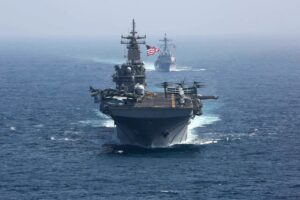
Simultaneously, the United States has now increased its military footprint and operational readiness in the Middle East, including expanded aerial exercises and the deployment of additional naval assets. U.S. officials have stated that these moves are intended to reinforce deterrence and protect regional stability, yet they also heighten the risk of miscalculation in an already tense environment. Such deployments, when combined with increasingly blunt statements from senior political figures, have led many analysts to conclude that Washington is increasingly prepared to resort to force should diplomatic efforts stall. Observers have noted that U.S. President Donald Trump, who has returned to office pledging a more confrontational approach to perceived adversaries, has repeatedly demonstrated a willingness to employ maximalist pressure tactics and unpredictable signaling. As such, this has raised concerns about the potential for reckless escalation absent clear diplomatic off-ramps.
Despite these dynamics, several structural constraints continue to shape how and when a U.S.-Iran conflict could unfold in the near term. Domestically, the American public remains deeply wary of another prolonged conflict in the Middle East, particularly one that lacks a clear legal mandate or defined end state. Regionally, U.S. allies and partners are divided, with many urging de-escalation out of concern that a war with Iran would destabilize already fragile states, disrupt global energy markets, and provoke retaliatory attacks against American forces and civilian infrastructure across the region. At the same time, some experts have cautioned that these constraints may no longer function as effective barriers to conflict, particularly in a context where incremental military actions and miscalculations could rapidly escalate beyond initial intentions.
The costs of escalation would be severe. Iran is already experiencing profound internal repression, with widespread reports of arbitrary detention, lethal force against protesters, and systemic abuses. A U.S.-led military campaign would almost certainly exacerbate civilian suffering, risking mass displacement, loss of life, and further erosion of basic rights – especially amid wartime conditions. Strikes on nuclear or dual-use facilities also carry the danger of environmental harm and long-term public health consequences, particularly for civilian populations with little capacity to mitigate such risks.
Ultimately, prevailing conditions suggest that the risk of direct military conflict between the United States and Iran is no longer remote. Rather than serving as a stabilizing equilibrium, the current pattern of pressure, deterrence, limited military actions, and stalled diplomacy appears to be generating momentum toward confrontation. For policymakers and human rights advocates alike, this juncture represents a critical test of whether escalation will be allowed to define the future of U.S.-Iran relations, or whether renewed diplomatic engagement and restraint can still prevent a conflict whose human and regional costs would be immense.
Iraq Kurdistan Government’s Bolstering of the PKK in Syria Jeopardizes Prospects of Stability
Following years of conflict and repression under the previous Assad regime, Syria is in the midst of a fragile and high-stakes transition aimed at alleviating political fragmentation, economic deprivation, and prolonged instability. These conditions have driven much of the population into poverty and caused mass internal displacement. Syrians have also sought refuge beyond the country’s borders in over 130 countries worldwide, a figure cited as illustrating the scale of the humanitarian crisis. To address these issues and improve circumstances within Syria, the new government in Damascus under President Ahmed al-Sharaa has sought a unifying agenda which promotes a more centralized government, combats security threats, and focuses on reconstructing the economy and establishing harmonious diplomatic relations with countries around the world. This is an approach that the United States and other foreign partners view as a potential pathway towards long-term stability. Greater stability in Syria could attract foreign markets, boost productivity, foster trade, and enable economic recovery and the much-needed delivery of humanitarian aid. It could further support the reconstruction of essential infrastructure such as healthcare systems, housing, and transportation, as well as facilitate the return of displaced civilians.
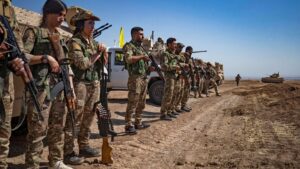
Despite these goals, Syria’s efforts face challenges, particularly from Kurdish authorities and forces who view centralization and integration as a threat to their autonomy and economic security. In response to the widely backed agreement which calls for the integration of the Syrian Democratic Forces (SDF) into the Syrian state apparatus, recent reports have indicated that the Kurdistan Regional Government (KRG) in northern Iraq has mobilized and allowed some military members to join the Kurdistan Workers’ Party (PKK) in Syria. Although the KRG has historically opposed the PKK, designating them as a terrorist organization, analysts note that current events have pressured them to respond, which puts significant strain on their relations with Turkey. The groups’ original objective of establishing an independent Kurdish state in Turkey prompted decades of conflict – one which has lasted for several decades and has shaped their responses to Syria’s integration and centralization efforts as well.
If Syria’s centralization attempts proceed, some Kurdish forces fear a loss of not only territory, but also their primary source of economic leverage: control over oil and gas fields. Major energy sites such as al-Omar and Rumaila, located in northeastern Syria, have been controlled by the SDF for years, and account for nearly 70%-90% of Syria’s oil. The KRG has played a significant role in purchasing and exporting this oil, a relationship that has supported the Kurdish economy for years. Yet, some sources have questioned where the oil revenues have been distributed, with members of the Barzani family facing long-standing allegations related to oil operations. Both Nechirvan and Masrour Barzani maintain that oil exports go towards funding government salaries, public services, and infrastructure development, but there is ample evidence of stolen and exploited oil and other resources. Investigative reports and independent audits have consistently highlighted significant discrepancies in the KRG’s oil revenue accounts, contrasting sharply with the Barzani family’s assertions that funds are appropriately distributed for public services and salaries. Instead, reports indicate billions of Iraqi Dinars remain unaccounted for and have been diverted for personal use, fueling longstanding corruption and theft allegations.
From the KRG’s standpoint, the loss of oil revenues and the dismantling of the SDF represent a broader threat to Kurdish autonomous structures, not just in Syria but across the region. This response is often framed as a security-driven calculation, not a reflection of ideologies, and sheds light on why the KRG is allowing some of their militia members to join the PKK as a response to policies that could alter existing power balances. Should conditions in northeastern Syria deteriorate and spark new conflict, there is a legitimate concern among analysts that Kurdish communities across the region are likely to mobilize further – potentially leading to more civilian displacement and increased instability. A troubling outcome like this would place additional strain on humanitarian systems, like refugee camps that are already at capacity and struggling to care for displaced populations.
Additionally, heightened mobilization, resistance to Syria’s efforts aimed at centralization under the new government in Damascus, and threat of destabilizing conflict pose other risks. The PKK has been known to rely on guerrilla warfare tactics, including conducting their operations in civilian-populated areas, which can increase the likelihood of further death and displacement. Limited resources and present conditions raise even more concerns about civilian harm and displacement. The expansion of armed conflict could also undermine ceasefire efforts and derail any prospects for peaceful dialogue and agreements. While the pursuit of stability in Syria offers long-term benefits, many observers argue that the safety of civilian populations will ultimately depend on whether armed groups like the PKK and non-state governing authorities decide to engage in diplomatic efforts with the new Syrian government – as the latter has emphasized its commitment to instituting policies that prioritize inclusive governance and the protection of the cultural and social rights of all Syrians. International mediators have pointed to Syria’s 14-point plan which grants Kurdish individuals citizenship rights and cultural protections as clear evidence of Damascus’ efforts to promote inclusivity and stability. Analysts see integration and the consolidation of Damascus’ control over the country as vital to Syria’s prospects of stability, and without it, the state lacks the capacity to rebuild.
Israel Continues Its Illegal Campaign to Dismantle International Humanitarian Agencies That Aid Palestinian Refugees
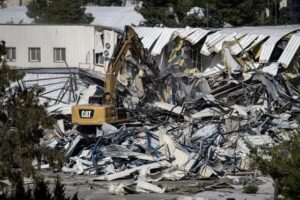
Over the course of the past month, Israel has continued its illegal campaign to dismantle the work of international humanitarian groups in both the occupied West Bank and Gaza, including those that aid Palestinian refugees such as the United Nations Relief and Works Agency for Palestine Refugees in the Near East (UNRWA). For years, analysts have outlined how Israeli authorities’ longstanding efforts to hinder UNRWA in particular are rooted in a politically calculated attempt by right-wing voices to undermine the agency’s work – and in their eyes – erase the Palestinian refugee issue and the universally recognized right of return to lands that Palestinians were forcibly displaced from. Thus, Israel has long sought to smear the work of UNRWA and other humanitarian groups as a means of trying to justify its dismantling of them. Back in early 2024, Israel made false accusations regarding UNRWA and the October 7th Hamas attacks that were subsequently debunked. Now, it has carried out widely condemned demolitions of the UNRWA headquarters in Jerusalem – merely one of Israel’s latest attempts aimed at thwarting the aid agency and the important humanitarian role that it plays.
Israeli efforts to do so have always been about eroding Palestinian rights and stripping them of any potential refugee status that paves the way for their right of return under international human rights law. UNRWA serves as a constant reminder that Palestinians were forcibly displaced from their ancestral homes and has therefore been a target of Israeli officials for decades who seek to, in essence, sweep the Palestinian refugee issue under the rug. Many right-wing figures have even openly relayed their desire to abolish the term “Palestinian refugee” by stating that the children and grandchildren of refugees should not be granted the right of return. They have also tried to portray forcible displacement of Palestinian refugees as a distant historical occurrence, rather than what it actually is: an ongoing humanitarian, legal, and societal injustice. As such, UN agencies like UNRWA pose a threat to this ideology, so Israeli authorities have long sought to delegitimize and dismantle them as a way to stop people from using the aforementioned term and upholding this right under the principles of international law and social justice. Israel’s attempts to destroy the agency are made even more egregious considering the vital role played by UNRWA and others like it. The agency provides critical health care, education, food, water, housing, employment, emergency, relief, and social services – resources that are especially needed given Israel’s destructive war on Gaza and its escalating human rights violations in the occupied West Bank as well. The organization has played a key role in aiding the lives of millions of civilians since its founding in late 1949. Dismantling UNRWA would be catastrophic, as the aid agency forms the backbone of humanitarian relief distribution in Gaza. Without it, many civilians will lose their last remaining access to food, water, medicine, and other basic resources.
Beyond UNRWA specifically, Israel has increasingly targeted the humanitarian systems that support Palestinian refugees and civilians, both in Gaza and the occupied West Bank. By undermining agencies that recognize refugee status across generations, Israeli authorities are attempting to normalize the idea that Palestinians no longer possess claims to restitution, protection, or right of return. This regrettable rhetoric has been accompanied by actions such as the demolition or seizure of aid organization offices as well as severe obstructions towards humanitarian operations. This week, eleven countries including Canada, France, Ireland, Japan, Norway, Portugal, Spain, and the United Kingdom condemned Israel’s recent demolition of UNRWA headquarters in Jerusalem as an unprecedented act against a UN relief agency and an unacceptable move to undermine UNRWA’s work.
Meanwhile, during the past month in Gaza, Israel has initiated atrocious operational bans and license revocations against several dozen major humanitarian organizations such as Doctors Without Borders, Mercy Corps, and Oxfam. These have consisted of movement restrictions and even outright exclusion – severely hindering their ability to provide medical care, food aid, and civilian protection. Observers have pointed out that from a humanitarian law perspective, there is no justification for obstructing neutral aid organizations, particularly when civilian infrastructure and humanitarian conditions have been devastated by two years of conflict in Gaza. The cumulative effect of these policies is not only the worsening of Gaza’s already dire humanitarian crisis, but also the systematic dismantling of international mechanisms designed to protect forcibly displaced civilians and refugees. All told, the recent actions against UNRWA and others are only some of the latest in a long line of Israeli measures which represent a complete disregard for norms and principles of international law.

