
The National Interest Foundation Newsletter
Issue 323, February 27, 2026
Welcome to our NIF Newsletter. In this week’s edition, we discuss the U.S. embassy in Jerusalem offering consular services in illegal West Bank settlements, provide analysis on the fact and fiction in President Trump’s State of the Union address, delve into the Supreme Court invalidating President Trump’s tariffs, and explore why Department of Homeland Security (DHS) policy changes have sparked concern over the rights of legal refugees and asylum seekers.
Editor: Bassam Tarbush
U.S. Embassy in Jerusalem Offers Consular Services in Illegal West Bank Settlements
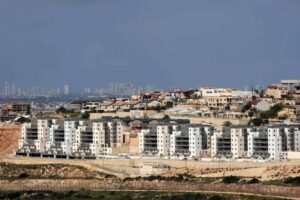
This week, an announcement that the U.S. Embassy in Jerusalem will offer passport and consular services at an illegal Israeli settlement in the occupied West Bank has drawn condemnation as a blatant violation of international law. Analysts and international legal experts have outlined the wrongful nature of the move and how it sets a dangerous precedent, given that it de facto legitimizes unlawful Israeli control over these areas – blurring the lines between occupied land and sovereign territory. Further eliciting alarm was the embassy’s unveiling of plans for consular services to be provided in the coming months inside another illegal settlement as well as other locations.
Regrettably, the decision did not come as a total surprise to many. While the Trump administration has publicly voiced opposition to the idea of Israeli annexation of the occupied West Bank, it has not taken any measures to halt continued illegal settlement activity and other Israeli violations – which have been on the rise since Trump retook office last year. In fact, the U.S. has continued to use its global sway to shield Israel from being held accountable for its repeated breaches of international law – including illegal settlement expansion – and as a result, the recent announcement from the embassy was not a shock for many critics and rights advocates. These entities have highlighted how the move is highly problematic because it normalizes unlawful settlement expansion – essentially supporting the legitimacy of Israeli settlements in the occupied West Bank despite the fact that the global community considers these to be illegal. Article 49 of the Fourth Geneva Convention stipulates that an occupying power cannot transfer its civilian population into occupied territory. However, in total breach of this, Israel has done just that and consolidated control over what is universally acknowledged as Palestinian territory.
The scale of Israeli human rights violations and breaches of international law are immense and extend beyond illegal settlement activity and expansion. Various rights groups have documented an array of unlawful activities including the destruction of property, illegal seizure of land, the targeting of civilians, war crimes, arbitrary detentions, and torture of prisoners. All of this has prompted the issuing of arrest warrants for Israeli officials and the filing of genocide cases at the world’s highest courts and tribunals such as the International Court of Justice (ICJ) and the International Criminal Court (ICC). Yet despite the alarming and growing evidence of Israeli transgressions, the Trump administration has not only shielded Israel from mechanisms of accountability, but it also has – in the case of the recent embassy announcement of the offering of consular services at an illegal Israeli settlement – rewarded Israel for its unlawful behavior. Ultimately, it is moves like these that regrettably only serve to embolden and enable repeated Israeli violations, while at the same time preventing concrete international forms of accountability from being initiated which could deter this from continuing to take place.
The enabling of Israeli breaches of international law is especially problematic in the current global climate given that worldwide perception of Israel has grown increasingly critical in recent years. Much of this has been fueled by Israel’s devastating Gaza War and undeniable evidence of war crimes and human rights violations – both in Gaza and the West Bank. While the world has been largely fixated on what has transpired in Gaza since late 2023, human rights advocates have sought to draw attention to increasing Israeli violations in the occupied West Bank as well. This has seen an unprecedented rise in illegal settlement expansion and settler violence during this same period of time. Rather than initiate policies and actions which push back against these unlawful activities, recent decisions like the one to provide consular services in illegal Israeli settlements instead encourage further violations. As observers have outlined, the move is not only an administrative one, but a political one as well. It signals that the Trump administration is endorsing the continued unlawful expansion of Israeli settlements in occupied territory – much to the detriment of the upholding of international law and the prospects of long-term peace and stability.
President Trump’s State of the Union Fact and Fiction!
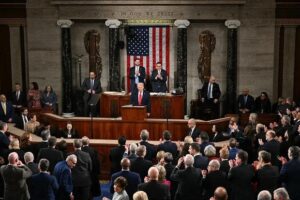
President Trump delivered his State of the Union address to a joint session of Congress earlier this week on Tuesday evening. The speech comes as lawmakers face big decisions on domestic spending, national security, and the direction of U.S. engagement abroad. As with past addresses, several of the president’s assertions prompted immediate examination from policy analysts and fact checkers. Throughout the remarks, the president returned several times to the topic of Iran, warning that the country is “closer than ever before to a nuclear weapon” and using the longstanding debunked claim – which war hawks have sought to peddle for decades as a guise for pushing military action against Iran – to try to justify a hardline stance in U.S. foreign policy. To many, it was evident that Trump was attempting to lay the groundwork for the potential use of military force against Iran.
This portion of the speech raised several concerns. Independent experts and intelligence assessments have repeatedly found that Iran is not currently building a nuclear weapon or close to one. In fact, its leadership has consistently denied seeking nuclear weapons capability. Over recent years, international inspectors from the International Atomic Energy Agency have been present in the country and have not detected activities that would signal an imminent weapon. Public reporting from multiple intelligence agencies and analysts has stressed that Tehran may have the technical capacity to enrich uranium to higher levels, but there is no direct evidence that it is pursuing a weapons program. These longstanding assessments have been widely reported and verified. More importantly, they stand in contrast to the president’s framing in the speech. This gap between political rhetoric and established expert analysis may contribute to misperceptions among the public, especially as national security fears tend to resonate strongly with audiences. The Iran portion of the address also referenced regional aggression, citing support for proxy groups and hostility toward neighboring states. However, the leap from regional influence operations to an imminent nuclear threat is not supported by current evidence.
The president also addressed immigration, trade, and economic growth during his address. On the economy, he reiterated that unemployment is low and that wages are rising. For many workers, wages have indeed grown in recent years, but inflation adjusted income gains have been uneven. When adjusted for inflation, median household income in the United States was essentially flat over the past decade. In 2024 it was about $83,730, only slightly above its 2019 level of roughly $83,260.
On immigration, the president presented border security as a cornerstone of national sovereignty and public safety. He argued that increased enforcement would reduce crime and drug trafficking. It is true that border authorities have seen record levels of apprehensions in recent years, and that smuggling networks remain a serious concern. However, multiple studies have found that immigrants are incarcerated at significantly lower rates than native born citizens. For example, an analysis of U.S. Census data found that immigrants are about 30 percent less likely to be incarcerated than people born in the United States.
The president also touched on international trade. He claimed that new agreements and tariffs have improved the U.S. trade balance and benefited domestic manufacturers. Trade numbers do show periods of improvement in certain sectors, but the overall picture remains mixed. Consumer prices for some imported goods rose as tariffs were applied, and some companies absorbed costs rather than passing savings to consumers. Export levels to key markets remain vulnerable to global demand swings and shifts in currency values.
There were moments in the address that seemed intended to appeal directly to the president’s political base. Several members of Congress were invited as honored guests when specific policy areas were discussed. These moments, though emotionally charged, did not always include data to support the narratives presented.
The president highlighted new investments in roads, bridges, and broadband expansion, and several lawmakers from both parties applauded those elements. Independent analysts have noted that infrastructure investment is one of the few areas where agreement persists in Washington. Still, the scale of planned investments presented in the speech will require further negotiation with Congress, and the final outcomes may look different from what was outlined.
On foreign policy beyond Iran, the president reaffirmed commitments to longstanding alliances in Europe and Asia. He cited contributions to NATO and increased military cooperation with key partners. These aspects of U.S. foreign policy have generally received support from bipartisan majorities in Congress. Yet even here, the speech glossed over complex debates about cost sharing and strategic priorities in the face of rising competition from other powers.
Fact checking organizations have already identified several other specific claims in the speech that do not align with available data. For example, the president stated that violent crime has risen nationwide. In fact, while some cities have seen increases, the national crime rate has fluctuated and, in many categories, remains below peaks from decades ago. Similarly, assertions about job creation in certain sectors did not fully account for labor force participation trends and shifts in employment patterns.
All told, the segment on Iran in particular will likely draw sustained attention. By repeating an assertion that has been widely investigated and found lacking in evidence, the president created a sense of imminent threat that is not backed by current authoritative assessments. The manner in which that framing influences foreign policy decisions, public opinion, and congressional oversight remains to be seen.
Supreme Court Invalidates President Trump’s Tariffs
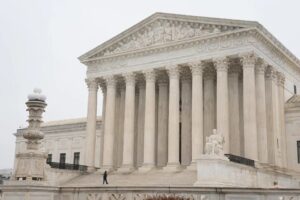
The U.S. Supreme Court’s recent decision to strike down President Donald Trump’s global tariffs was a significant development, sending reverberations through Washington and among domestic industries and trading partners around the world. In a 6-3 ruling issued on February 20th, the high court deemed that the tariffs – which were imposed under an emergency economic powers law – exceeded executive authority and therefore violated the Constitution’s allocation of taxing powers to Congress. The decision represents a notable legal rebuke to one of the central pillars of the administration’s trade agenda and raises questions about how it will conduct trade policy in the years to come. The International Emergency Economic Powers Act (IEEPA) was a statute enacted in 1977 that grants the president certain powers to regulate international economic transactions during periods of declared emergency. However, the court’s majority opinion, authored by Chief Justice John Roberts, held that this law did not provide a valid legal basis for sweeping tariffs on imports from nearly every country in the world. Roberts emphasized that the Constitution clearly assigns the power to levy taxes, including tariffs, to Congress, not the executive branch.
The ruling has profound legal and political implications. It essentially undercuts much of the president’s unilateral approach to trade policy and reinforces the idea that major shifts in economic policy require clear statutory authorization from legislators. It is also the first major rebuke of the administration’s economic agenda by the nation’s highest court since the president returned to office. Even as the court delivered its judgment, the ruling did not immediately erase tariff duties on consumer goods and industrial inputs. Before the decision took effect, the administration responded by enacting a temporary global tariff of 10 percent under Section 122 of the Trade Act of 1974. Within days, that rate was raised to 15 percent, the maximum allowed under that statute, though the 150-day limit on these tariffs means they must either expire or receive congressional approval to continue. Critics argue that Section 122 was never intended to serve as a long-term substitute for the broad powers that were invalidated by the court.
One immediate consequence of the Supreme Court’s ruling is legal uncertainty surrounding the tariffs that were previously collected. Businesses that paid duties under the now-invalid emergency powers framework are already filing lawsuits seeking refunds. One major example is a suit brought by a leading logistics and shipping company seeking reimbursement of tariffs it paid during the past year, which could amount to tens of billions of dollars once similar cases are combined. Financial analysts estimate that the total liability could range from roughly $130 billion to $175 billion, a figure that threatens to complicate the federal budget and Treasury operations.
The ruling has also triggered a volatile reaction in financial markets and among businesses. Shares of major retailers and importers fluctuated as investors weighed the impact of both the invalidation of tariffs and the imposition of the new flat global surcharge. Companies that faced steep duties on imported components and products under the previous administration, such as major technology and apparel firms, may benefit from a refund process and lower effective tariffs in the short term. Some analysts warn that companies will hold onto potential refunds rather than passing relief directly to consumers, leaving households still burdened by higher prices.
The original tariffs were a cornerstone of an effort to address persistent trade deficits, particularly with China, and to protect domestic industries from foreign competition. Critics, however, argue that such tariffs distort supply chains, raise input costs, and ultimately raise prices for consumers and businesses. Estimates from tax and economic research groups suggest that average American households bore roughly $1,000 in additional costs from the tariff system in 2025, with more possible in 2026 had the emergency powers framework stayed in place.
The Supreme Court’s decision also opens a new chapter in the debate over the balance of power between the executive branch and Congress in shaping trade policy. With the IEEPA basis struck down, the administration’s future tariff actions will likely depend on narrower, sector-specific laws or formal legislative authorization. Section 301 of the Trade Act of 1974, which allows the president to impose tariffs in response to unfair trade practices, and Section 232, which pertains to national security, are potential legal pathways. But both require more procedural steps and, in the case of Section 301, often involve formal investigations that can take months to complete.
For trading partners, the ruling has prompted mixed reactions. Some U.S. allies welcomed the decision, viewing it as a return to more predictable trade norms and a reaffirmation of the rule of law. Others, particularly countries that had negotiated preferential trade deals with the United States, remain wary of future uncertainty. Several nations have sought reassurance that existing agreements will be respected even as the United States reconfigures its tariff framework.
Domestically, trade policy has become a divisive issue in American politics, with competing views on the best path to support domestic industries, reduce trade deficits, and maintain strong diplomatic ties. The Supreme Court’s constriction of executive power will likely influence how future administrations approach tariffs and broader trade negotiations, particularly as lawmakers consider their role in authorizing or limiting economic measures.
In the short term, uncertainty is likely to persist. The temporary tariffs under Section 122 will remain in effect for several months, and the refund process for previously collected duties is expected to be protracted and contentious. Businesses and consumers alike will be watching closely to see how Congress chooses to engage with trade policy and whether a more stable, long-term framework can emerge from the current impasse.
DHS Policy Changes Spark Concern Over the Rights of Legal Refugees and Asylum Seekers
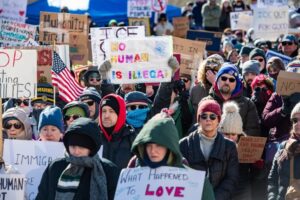
A new Department of Homeland Security (DHS) memo put out last week has elicited concern among immigration and human rights advocates. The shift in policy would pave the way for the potential indefinite detainment of thousands of legal refugees in the United States and is seen by many as an alarming development given that it reverses decades of precedent by transforming what has always been a routine administrative step in the green card acquisition process into a mechanism for arbitrary arrest and rescreening. Under the modified plans, after a year, if a legal refugee does not apply for permanent resident status, they can be detained for an unspecified amount of time. This represents a stark change from past guidelines which required DHS to either release a detained individual or initiate removal proceedings within 48 hours of an arrest. The troubling ambiguity around this unspecified time period means that legal refugees may be held in detention centers indefinitely. Concerns have also arisen in the past few months as the state of these facilities and the treatment of detained individuals is increasingly coming under scrutiny.
Moreover, the unconditional nature of the policy shift has drawn criticism as an abuse of government power and a violation of the 5th and 14th amendments. Observers have pointed out that immigrants have a right to due process and equal protection and that detaining them without evidence that they are a flight risk or have been involved in criminal activity is an infringement on this. The changes would also expedite the legal process so that individuals are not granted a full hearing before a judge, which has been argued to be unconstitutional. For these reasons, many have deemed that the actions reflect a shift towards using the altered mechanisms as a way to rapidly expel people and bypass legal and due process procedures. This has all been made even more concerning given that the memo comes after a federal judge in Minnesota recently issued a ruling blocking the Trump administration’s “Operation Post-Admission Refugee Reverification and Integrity Strengthening (PARRIS)” – which had been targeting legally admitted refugees for arrest and detention. The ruling had found that the operation was unlawful, unwarranted, and an unconstitutional abuse of power. Around 5,600 refugees were saved from being detained and more were instructed to be released.
Critics contend that the newly planned DHS policy unfairly punishes legal residents on their way to obtaining lawful permanent resident (LPR) status and unnecessarily extends the vetting process. Individuals already undergo extensive background checks, interviews, biometric collection, document verification, and further checks that can often take years to complete. They also must reside in the United States for at least a year before getting their green card. On top of that, the Trump administration has indefinitely halted the processing of visas from over 75 different countries – with this including people applying for permanent residency, asylum, and citizenship. Many have tried to highlight how this is a serious humanitarian concern given that in asylum cases whereby highly vulnerable individuals are deported back to their countries of origin, they are at risk of facing severe and life-threatening consequences. As such, having their status upended is dangerous and would force them to return to situations they fled due to previous repression and persecution.
Due to this, rights groups have outlined that the new policy violates the Refugee Act of 1980 and the international law against refoulement – the forcible return of refugees to countries where they face persecution. The indefinite suspension of halting proceedings and detaining asylum seekers violates the due process obligations laid out in 1980. Furthermore, tens of thousands may be subjected to this new policy, which could also inflict trauma and separate families across the United States. This is why the shift is seen as a deliberate undermining of humanitarian protections laid out under the 1980 act. Consequently, a coalition of 250 human rights organizations have recently condemned these changes, calling for legislators to reject the Border Safety and Security Act – which would essentially close the border to those seeking asylum. These groups have also urged members of Congress to consider how the bill would negatively impact human rights and the global perception of the U.S. as a country that opens its doors to those most vulnerable and in need of protection. Additionally, recent polls consistently show that a majority of Americans support protecting access to the asylum process. Therefore, if the bill were to pass, it would not only negatively impact the lives of refugees and asylum seekers but also would fail to reflect the wishes of most Americans.
Another argument critics of the policy shift put forth is that it falsely presumes these refugees have engaged in criminal activity, which is why they require a more extensive criminal background investigation. This brings up legitimate questions over the true purpose behind the policy. Refugees have already completed years of extensive security checks and documentation before being granted access to enter the United States. The majority of them have come from non-European, predominantly non-white countries, and these heightened restrictions disproportionately affect their populations. Immigration from European countries has not been targeted on the same level, so these regulations that primarily target refugees from non-white countries reinforces ideas of unequal treatment within the Trump administration’s immigration policy. Overall, the newly proposed DHS changes pose serious humanitarian and racial concerns, raising questions about the underlying purpose of the shift.

