

The National Interest Foundation Newsletter
Issue 324, March 6, 2026
Welcome to our NIF Newsletter. In this week’s edition, we examine how President Trump disregarded a warning from the top U.S. military officer about the risks and consequences of war with Iran, discuss the disruptions to the Strait of Hormuz and their significant effect on the global economy, delve into why Trump’s plan to arm Kurdish forces to start a ground war in Iran has sparked fears of an expanded and protracted conflict, and explore the potential impact of the Iran war on upcoming 2026 midterm elections.
Editor: Bassam Tarbush
Trump Disregards Warning from Top U.S. Military Officer About the Risks and Consequences of War with Iran
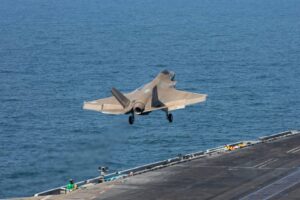
In the wake of the outbreak of war with Iran, a recent high-level meeting at the Pentagon has drawn new attention to the risks surrounding the Trump administration’s decision to initiate military strikes against Tehran. According to those familiar with the discussions, Chairman of the Joint Chiefs of Staff General Dan Caine – the United States’ top military officer – issued a direct and urgent warning to President Trump about the potentially dangerous consequences of launching a military campaign. Caine cautioned Trump that even limited strikes could escalate quickly, entangle U.S. forces in a prolonged conflict, and destabilize an already fragile region. Despite those warnings, the administration moved forward with the attacks, marking one of the most consequential foreign policy actions of the president’s second term thus far – something that has prompted debate within Congress, among allied governments, and across the defense community.
Senior military officials are said to have outlined several scenarios during the Pentagon meeting. One involved retaliatory strikes by Iran against U.S. assets in Iraq and Syria, where roughly 2,500 American troops remain stationed. Another scenario focused on the possibility that Iran could activate allied armed groups in Lebanon, Yemen, and elsewhere to target U.S. partners and allies. Defense planners reportedly stressed that even a limited exchange could expand beyond its original scope, particularly if civilian casualties or high-profile targets were involved. The Middle East is home to more than 40,000 U.S. service members across multiple bases and naval installations. Many of these positions are within range of Iranian ballistic missiles or armed drones. In recent years, Iran has demonstrated the ability to strike regional targets with precision, and thus, any sustained exchange would likely expose U.S. personnel and regional allies to significant risk.
What has added to the uncertainty is the lack of clarity about the administration’s long-term objective. In public remarks following the strikes, President Trump suggested that the campaign could ultimately result in the fall of Iran’s leadership. In contrast, other senior administration officials stated that the goal is not regime change but rather deterrence and the degradation of specific military capabilities. The discrepancy between those messages has fueled concern that there is no clearly defined end state guiding the operation. Analysts note that wars without clearly articulated objectives are more likely to expand in scope over time. The United States has experienced similar dynamics in previous conflicts where limited missions evolved into long and protracted engagements with unclear outcomes.
In addition, while the president has broad authority as commander-in-chief, sustained military action typically involves congressional debate over funding and legal justification. Lawmakers from both parties have begun calling for classified briefings to better understand the scope of the operation and the intelligence assessments behind it. The regional implications are equally significant. Iran maintains ties with non-state armed groups across the Middle East. If hostilities intensify, those groups could initiate attacks against U.S. partners and allies. Even governments that are not directly involved in the conflict could face unrest from domestic populations opposed to deeper regional war. In countries already dealing with economic strain and political tension, the prospect of another large-scale conflict could foment and worsen instability. Energy markets have already responded to the uncertainty. Oil prices rose sharply in the days following the strikes, reflecting fears that shipping lanes in the Persian Gulf could be disrupted. Roughly 20 percent of the world’s petroleum supply passes through the Strait of Hormuz, a narrow waterway that Iran has previously threatened to close during periods of confrontation. Even temporary disruption could have global economic consequences, increasing fuel costs and adding inflationary pressure worldwide.
Another factor complicating the situation is the longstanding debate over Iran’s nuclear program. The Trump administration has frequently described Iran as being close to acquiring a nuclear weapon. However, independent and impartial U.S. intelligence assessments in recent years have indicated that while Iran has expanded uranium enrichment, there is no evidence that it has made efforts to develop nuclear weapons capabilities. That distinction is significant, as enrichment capability does not translate into weaponization. Critics argue that conflating the two may create a guise for escalation without clear proof of an imminent threat.
The longer the conflict continues, the greater the likelihood of unintended consequences. Prolonged air operations could lead to mass civilian casualties, which in turn could generate international condemnation and rally support for Iran within the region. Cyber retaliation is another possibility, as Iran has invested heavily in cyber capabilities that could target U.S. infrastructure or private sector networks. Allies are watching closely. European governments have urged restraint and emphasized the importance of preventing further escalation. Some regional partners support strong action against Iran’s military infrastructure, but they are also wary of becoming battlegrounds in a wider confrontation. Diplomatic channels remain open, yet the initiation of strikes has narrowed the space for de-escalation.
Once military action begins, political pressures, alliance commitments, and retaliatory cycles can make disengagement difficult. Without a unified message from senior officials about the ultimate objective, questions will persist about how success is defined and how the operation might conclude. For now, U.S. forces remain on heightened alert across the region. Lawmakers are seeking further briefings, markets are reacting to uncertainty, and regional actors are calculating their next moves. Whether the campaign can be in any way contained or devolves even further into a broader confrontation will depend on decisions made in the coming days and weeks.
Disruptions to the Strait of Hormuz and Their Significant Effect on the Global Economy
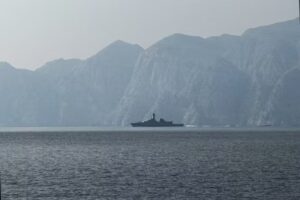
Over the past week, the onset of conflict in the Middle East has illustrated how the global economy is tied in with regional stability. The consequences of military escalations and confrontations, especially with energy-producing countries in the region, have substantial international implications that extend far beyond the Middle East itself. Global markets are immediately affected, especially when important trade passages are involved. In retaliation to the coordinated U.S. and Israeli attacks against Iran last Saturday which set off fresh conflict in the region, Iran essentially closed the vital Strait of Hormuz. The move caused immediate economic consequences, with oil and gas shipping rates soaring. Container ships are now avoiding the waterway altogether amid Iran’s threat to fire at any ship crossing the strait. The number of tankers crossing through is extremely limited, with only Iranian and some Chinese ships being able to cross. This closure has halted roughly 20% of the world’s oil and gas shipments, causing energy prices to surge, which have caused supply chain issues, and already impacted economies around the world, including in the United States.
The international oil benchmark, Brent crude, jumped by a staggering 13% on Monday, the highest in more than a year. Brent Crude is the primary global pricing benchmark for oil contracts, essentially acting as a “reference price” for oil. Countries use it to set the price of the oil they buy and sell. So, when Brent rises, it signals that supply shortages and the price of oil will change, because oil will be harder to get. Worldwide, this prompts fuel prices to increase, including the price of gasoline in the United States. Since oil is traded in an international global market, even countries who produce a lot domestically still experience the impact on prices and shortages when the Brent figure spikes. U.S. crude prices have jumped before in previous conflicts, like in tanker seizures or drone strikes with Iran, and the stock markets experience short-term volatility as well. Shipping companies and even airlines in the United States were also negatively impacted because fuel is among the most important things in these industries. In the past, when seeing these short-term rises in oil prices, U.S. presidents have applied diplomatic pressure and other forms of regulation to manage oil price spikes. With the Iranian Hostage Crisis for example, President Carter banned oil imports from Iran and applied domestic price controls to lower costs. The objective is to avoid any long-term effects on the economy. In this latest conflict, President Trump has ordered the Navy to protect maritime trade, but it is still uncertain how things will play out.
Historically, the Strait of Hormuz route was used for transporting ivory, silk, and spices. Now, it is the primary maritime trading route for oil and gas from major producers such as Saudi Arabia, Iran, Iraq, UAE, Kuwait, and Qatar. It is also a highly strategic location, connecting the Persian Gulf and Arabian Sea, allowing millions of barrels to pass through each year. About a fifth of the world’s oil passes through here, therefore, any disruption impacts oil trade and prices significantly. The strait’s narrow geography makes it one of the most important “chokepoints” in the world and there are few alternative routes that are as efficient and capable of handling such large amounts of exports. Thus, should the war persist for a substantial amount of time, Iran’s threat to essentially shut down the strait, if long-term, would not only increase the price of oil, but it would increase inflation and slow GDP growth across the globe. Insurance costs for shipping would rise as well and energy importing countries would face supply shortages, especially those in East Asia and Europe. Even in the United States, higher oil prices can affect the cost for consumers, and the Federal Reserve would be under a lot of stress with managing inflation.
Ultimately, the Strait of Hormuz crisis demonstrates how interconnected our global economy has become. A major disruption of such a critical trade route can unsurprisingly have severe consequences for the global economy and affect both financial markets and trade industries. If the shutdown continues, the strain could move beyond short-term spikes in oil and gas prices, and lead to more long-term problems like economic instability, investment reductions, slow economic growth, and wide-ranging trade impacts. As a result, the outbreak of war with Iran may carry with it weighty and lasting economic consequences.
Trump’s Plan to Arm Kurdish Forces to Start a Ground War in Iran Sparks Fears of an Expanded and Protracted Conflict
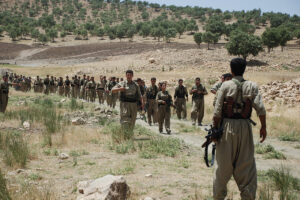
The reported plan by the Trump administration to arm Kurdish forces to initiate a ground campaign against the Iranian government has sparked profound alarm among military analysts, regional neighbors, and other observers. The move severely risks bringing about an expanded and protracted conflict through the likelihood of it causing regional spillover and leading to a more chaotic and unpredictable political landscape – both within Iran and across the region. One of the foremost concerns is that a Kurdish-led ground war would not remain contained within Iran’s borders and instead create a spillover effect that threatens the stability of neighboring countries like Iraq and Turkey. Ankara is likely to view any emboldened Kurdish military movement as a threat to its own stability and thus, if Kurdish forces make significant gains in Iran, Turkey could very well be dragged into an expanded conflict. Additionally, since many Kurdish groups have a foothold in northern Iraq, a full-scale U.S. arming of Kurdish forces to carry out a ground operation in Iran would almost certainly turn Iraq into a primary battlefield for a broadened war.
There are substantial risks within Iran itself, as experts fear that arming groups to try to topple a centralized government is a recipe for protracted civil unrest, rather than some type of straightforward transition of power. Since Iran is a widely diverse political landscape, arming Kurdish groups could also lead to further instability and state fragmentation by spurring other groups like the Baluchs in the southeast or the Azeris in the northwest to take up arms. Iran’s large population and rugged terrain mean that an expanded conflict there would be extremely difficult to contain as well, potentially creating a major humanitarian and refugee crisis. The Iranian government has already initiated drone and missile strikes against Kurdish bases in Iraq and analysts fear that if the United States triggers an internal uprising, Tehran will escalate its asymmetric attacks against American bases and assets across the region. This risks further dragging the U.S. into a prolonged conflict with no exit strategy.
The idea of the Trump administration arming Kurdish forces to initiate a ground war in Iran on behalf of the United States has the potential for catastrophic regional blowback. The geopolitical dynamics of the Middle East strongly suggest that such a move is more than likely to result in prolonged instability and devastating unintended consequences. By specifically arming Kurdish forces, the United States risks turning what should be an organic domestic movement for reform from within Iran into a narrow ethnic-based conflict. This could elicit unrest among much of the country’s population, who would understandably view the insurgency as a foreign-backed separatist threat rather than some type of genuine liberation movement. Thus, the most likely scenario to come out of this would be a fractured state engulfed in protracted domestic unrest as opposed to a seamless transition of power. Ultimately, external military intervention – especially via proxy forces – often produces a nationalist backlash and therefore even Iranians who are highly critical of their government may unite in defense of their sovereignty against what they perceive as foreign meddling. Evidence suggests that such harmful interventions normally strengthen the most hardline elements of a government, allowing them to frame internal dissent as foreign-inspired and thereby seeking to justify brutal domestic crackdowns.
For all of these reasons, most observers agree that the Trump administration arming Kurdish factions to initiate a ground war in Iran is a highly dangerous and destructive endeavor. It risks transforming an already volatile conflict into an expanded war that will further destabilize the region at large. The move would likely prompt a military response from Turkey and also serve to undermine the sovereignty of Iraq – where many of these groups are based. It would be viewed as a direct foreign-backed intervention that could repeat the disastrous cycles of past endless wars and entangle the United States into a protracted ground conflict. By supporting armed ground forces, the Trump administration would be expanding its engagement in the conflict. This interventionist approach would entrench U.S. involvement and increase the likelihood of deploying American boots on the ground – a dreaded scenario that puts U.S. service members directly in harm’s way for an expanded and protracted conflict with no clear end in sight.
Potential Impact of the Iran War on Upcoming 2026 Midterm Elections

The United States’ military conflict with Iran is unfolding only months before the 2026 midterm elections, putting American foreign policy at the center of conversation. Military actions abroad have often carried domestic political consequences in the United States, particularly when operations evolve into prolonged conflict. With public support for military action against Iran already extremely low, the political implications of the conflict could become increasingly significant as voters head toward the midterm elections.
Recent polling indicates that Americans are deeply divided about the current military campaign. A national survey found that only about 27 percent of Americans approve of the strikes on Iran, while 43 percent disapprove and roughly 29 percent remain unsure. Another poll found similar results, with 48 percent of Americans opposed to the attacks compared with 37 percent who support them. These numbers suggest that the conflict begins without the kind of national consensus that often accompanies the early stages of military operations. In fact, surveys conducted before the conflict began indicated even deeper skepticism. One poll found that around 70 percent of Americans opposed U.S. military involvement in Iran prior to the escalation. Such figures stand in stark contrast to the early stages of previous American wars in the Middle East.
After the attacks of September 11th, public backing for military action in Afghanistan reached extraordinary levels. Early polling showed that around 90 percent of Americans supported the initial military response, creating one of the strongest rally effects in modern political history. The Iraq War, launched in 2003, also began with majority support. While public opinion was more divided than in the Afghanistan case, once the invasion began, a large share of the public initially backed the operation.
Yet those wars eventually reshaped American politics in ways that were unfavorable to the administrations that launched them. As the Iraq conflict dragged on and casualties mounted, public opinion shifted sharply. By 2007, major polls found that about 61 percent of Americans believed the United States should have stayed out of Iraq altogether. Dissatisfaction with the war became a central issue in the 2006 midterm elections, which saw a major shift in congressional power.
The lesson from those earlier conflicts is that high initial support does not guarantee political protection. Wars often begin with public patience and a willingness to give leaders time to pursue military objectives. Over time, however, that patience can fade as costs rise, timelines stretch, and strategic goals become unclear. Analysts who study public opinion have found that early approval can allow governments to expand military operations, but it does not prevent longer term political consequences once the public becomes weary of conflict.
If that dynamic holds true today, the current situation may be even more politically volatile. The war with Iran is starting with significantly lower public backing than either the Afghanistan or Iraq conflicts. That means there may be less political margin for error if the conflict becomes prolonged or produces significant casualties.
Another factor is the economic environment. Energy markets tend to react quickly to instability in the Persian Gulf. If the conflict disrupts oil supplies or raises fuel prices, voters may connect the war to rising costs at home. Polling already suggests this is a major concern. In one survey, 45 percent of respondents said they would be less likely to support the military campaign if it leads to higher gas or oil prices in the United States.
The political stakes are heightened by the timing of the conflict. Midterm elections historically serve as a referendum on the sitting president’s performance. Voters often use these elections to express dissatisfaction with national leadership, particularly during periods of uncertainty or economic strain.
There is also the issue of war objectives. Public opinion research consistently shows that voters are more supportive of military action when the mission appears limited and clearly defined. When the purpose of the conflict becomes unclear, approval tends to decline. Recent public statements from administration officials have sent mixed signals about the ultimate goals of the campaign against Iran. Some statements suggest the aim is deterrence or the destruction of specific military capabilities, while others hint at broader ambitions involving changes to Iran’s leadership. Uncertainty about the objective of a conflict can make it harder for leaders to maintain public support over time as well.
For members of Congress facing reelection, the political calculations are complicated. Lawmakers from the president’s party may feel pressure to stand behind the administration during an ongoing military operation. At the same time, they must consider how their constituents view the conflict. Representatives from competitive districts in particular may find themselves balancing party loyalty with voter sentiment.
History suggests that wars can begin with political unity and end with deep divisions. The conflicts in Iraq and Afghanistan demonstrated how quickly public attitudes can change once the realities of long military engagements become clear. The difference today is that the war with Iran has begun without that early consensus.
As the 2026 midterms approach, the trajectory of the conflict may become one of the most consequential factors in American politics. Foreign policy rarely dominates midterm elections at the level that they are expected to this cycle. If the campaign remains limited and short, its electoral effects may be minimal. However, if it expands into a prolonged and broad regional conflict, the political consequences could be far more significant. The unfolding conflict abroad may soon become inseparable from domestic elections.

