

The National Interest Foundation Newsletter
Issue 325, March 13, 2026
Welcome to our NIF Newsletter. In this week’s edition, we explore the lack of support for the Iran war among key U.S. allies and partners, examine how the outbreak of conflict in Iran has shed light on concerns regarding the role of Jared Kushner and Steve Witkoff as chief negotiators, analyze the impact of long-term war on Gulf countries and its wide-reaching effects, and look into service members filing complaints over dangerous military rhetoric that violates the constitutional separation of church and state.
The Lack of Support for the Iran War Among Key U.S. Allies and Partners
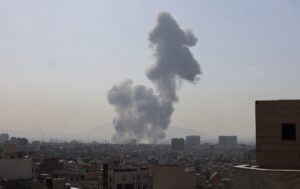
Since the onset of the Iran war, the lack of public support from traditional U.S. allies towards it has been evident. This has seen major American partners in Western Europe, the Gulf Arab states, and East Asia either express outright criticism of the Trump administration’s military actions or notable silence – illustrating the extent to which most have been opposed to the war efforts. Across Europe, several key U.S. allies, including Spain, France, and Italy have condemned the U.S. and Israeli military attacks against Iran. Spain’s Prime Minister Pedro Sanchez has described the military action as reckless and unjustified – while also labeling it a violation of international law. On top of this, Spain has explicitly refused to allow U.S. forces to use jointly operated military bases on its territory for attacks against Iran and has formally withdrawn its ambassador to Israel over its opposition to the U.S.-Israeli military offensive against Iran and the Gaza war. France and Italy have been noticeably critical as well. Earlier this week, the French foreign minister stated that U.S.-Israeli attacks on Iran fall outside of the framework of international law and lack clearly defined objectives. In Italy, Prime Minister Giorgia Meloni has repeatedly voiced that the country will not take part in offensive military operations against Iran, also describing them as interventions outside of the scope of international law. Furthermore, new polling in Italy has shown that nearly 70% of the population believe that Italy should follow Spain’s lead and deny the use of U.S. military bases on its territory.
Outside of Europe and among other noteworthy U.S. allies, the criticism has also been clear. Gulf Arab states have voiced significant discontent with the Trump administration’s handling of the conflict. Officials from several Gulf countries have relayed frustration and anger over the lack of advance notice of the U.S.-Israeli attacks and the Trump administration’s ignoring of their warnings surrounding the detrimental consequences of the war. Despite their status as primary security partners of the United States, observers have also outlined how many Gulf countries increasingly feel that the U.S. has failed to defend them enough – with a growing sense in the region that the military operation has focused on defending Israel and American troops, while leaving Gulf countries to protect themselves from Iranian retaliation.
Analysts have noted that this sentiment may spur Gulf states to reassess their reliance on the United States and instead explore deepening and diversifying their security ties with other countries. Additionally, reports have emerged that various Gulf states are reviewing the manner in which they deploy trillions of dollars invested by their sovereign wealth funds – in anticipation of offsetting the losses that have been triggered by the U.S.-Israeli war on Iran. Experts have pointed to how this signals the degree to which there is economic panic regarding the impacts of the Iran war. All told, for many, the conflict has prompted Gulf states to reconsider their regional strategies and the nature of their relationship with the U.S. under Trump. The hosting of U.S. military bases has turned Gulf nations into primary targets for Iranian retaliation, and as such, there is mounting resentment over them being drawn into the conflict because of this, with officials understandably criticizing the Trump administration for failing to provide adequate protection.
Longstanding U.S. allies in East Asia like Japan and South Korea have also expressed deep concern over the Iran war. Officials in Tokyo and Seoul are alarmed that the redeployment of U.S. naval, missile, and air defense assets from the region to the Middle East will leave the Indo-Pacific under-defended. In addition to this, both countries are heavily dependent on energy imports from the Middle East – making their economies extremely vulnerable to volatility and disruptions in the region. According to estimates from early 2026, a whopping over 90% of Japan’s crude oil imports and approximately 70% of South Korea’s come from the Middle East. These factors, along with concern over the legality of the U.S.-Israeli strikes themselves, have prompted a telling lack of endorsement towards the military actions from both Japan and South Korea. Civic groups and activists in the two countries have also been particularly vocal regarding their high levels of opposition towards U.S. and Israeli attacks on Iran.
Ultimately, the widespread opposition to the U.S.-Israel war on Iran from American allies across the globe stems from an array of concern over its illegality under international law as well as its detrimental effect on regional stability and the global economy. The conflict has prompted U.S. allies to reassess their security dependencies and has placed a serious strain on the United States’ most critical international partnerships. By alienating key partners and failing to prioritize the economic and security anxieties of regional allies, the current administration has threatened diplomatic stability in favor of dangerous escalation. To those advocating for a responsible U.S. role in global affairs, these developments serve as a reminder that American standing on the world stage is negatively impacted when it acts in noncompliance with the very international norms and collaborative frameworks that it helped to establish.
Outbreak of Conflict in Iran Sheds Light on Concerns Regarding the Role of Kushner and Witkoff as Chief Negotiators
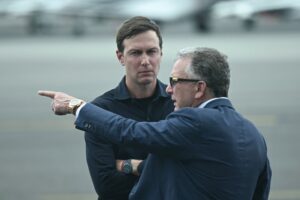
Recent diplomatic efforts between the United States and Iran in the lead-up to the ongoing conflict have drawn increased scrutiny due to the Trump administration’s heavy reliance on two figures outside of the traditional foreign policy establishment to conduct sensitive negotiations. Jared Kushner and Steve Witkoff have come up as figures in discussions related to Iran, a role that has prompted criticism from foreign policy analysts, former diplomats, and national security officials. The concerns largely center on the lack of qualifications, conflicts of interest, and the unusual structure of the negotiations themselves. Both men are close personal associates of President Trump. Kushner is the president’s son-in-law and served as a senior adviser during the first Trump administration. Witkoff is a longtime real estate developer and political ally who has maintained a personal relationship with Trump for years. Critics argue that their involvement in negotiations with Iran appears to stem primarily from these personal connections, rather than from a background in professional diplomacy or national security.
Negotiations with Iran are widely regarded as among the most complex diplomatic challenges in global politics. The issues involved include nuclear development, regional security dynamics, sanctions enforcement, and relations with U.S. allies across the Middle East. Historically, such negotiations have been conducted by experienced diplomats working through established State Department channels with extensive coordination across intelligence and defense agencies. In the current arrangement, however, Kushner and Witkoff have reportedly taken on leading roles without the same level of institutional oversight. Several reports indicate that meetings related to Iran have occurred outside of the normal diplomatic framework, with limited participation from State Department officials. This approach has drawn criticism from former career diplomats who argue that bypassing established procedures can weaken coordination and reduce accountability in sensitive negotiations.
A major concern involves the manner in which Kushner and Witkoff have engaged in negotiations, raising questions over their compromised loyalties and bidding on behalf of Israel rather than the United States. Observers have drawn attention to them regularly meeting with Israeli officials both before and after rounds of negotiations with other parties, demonstrating their commitment to serve Israeli interests in their diplomatic endeavors. In fact, various outlets have illustrated the extent of the intimate and deeply personal ties between the negotiators and Israeli officials – with Prime Minister Netanyahu having stayed and slept in Kushner’s childhood home. Revelations like these have understandably elicited criticism regarding the unfitness of Kushner to serve in a role as chief negotiator given the blatant lack of impartiality. Fair and traditional U.S. diplomacy should balance the perspectives of multiple regional actors while maintaining independent negotiating positions. However, analysts and former officials have shown that the current negotiation structure clearly blurs that distinction. Reports also suggest that some discussions related to Iran have included Israeli involvement without the full participation of U.S. diplomatic institutions. Critics say that this dynamic raises serious concern about whether negotiations are being conducted primarily through the lens of Israeli interests, as opposed to with U.S. policy in mind. The issue of potential conflicts of interest has also resurfaced because of Kushner’s previous security clearance controversy. During the first Trump administration, career security specialists reportedly raised concerns while reviewing Kushner’s application for access to highly classified information. In the standard vetting process for top secret and sensitive compartmented information clearance, security professionals evaluate potential risks related to foreign influence, financial entanglements, and undisclosed contacts. In Kushner’s case, career officials declined to approve his clearance during the initial review process due to concerns that included foreign contacts and vulnerabilities that could potentially expose him to influence. Despite these major concerns and objections, Kushner ultimately received clearance following intervention from senior political leadership. The episode prompted debate in Washington about whether standard security procedures had been overridden at that time.
Those earlier concerns have resurfaced in discussions about his current role in negotiations with Iran. Critics argue that individuals involved in sensitive diplomatic talks should undergo rigorous vetting and maintain clear institutional accountability and impartiality. When negotiations occur through informal channels or outside traditional diplomatic structures, some analysts warn that the risk of conflicting interests or miscommunication increases. Another controversy involving Kushner has emerged from public disagreements with political figures over the handling of Iran-related intelligence and policy discussions. Disputes over who should control access to sensitive information have fueled concerns about transparency within the decision-making process. These disagreements have also drawn attention to a larger question over how foreign policy decisions are being shaped within the administration.
Steve Witkoff has faced similar scrutiny due to his lack of prior diplomatic experience. Before his involvement in Middle East diplomacy, Witkoff built his career primarily in real estate development. While presidents have occasionally appointed trusted allies to informal diplomatic roles, critics note that negotiations involving nuclear policy and regional security typically require teams with deep technical expertise. Beyond questions about qualifications, some observers have raised concerns that the current negotiation approach may actually be undermining the prospects for meaningful dialogue with Iran. Reports have suggested that mixed messages and shifting proposals have complicated the diplomatic process. In some cases, critics claim that the actions of unofficial envoys have disrupted negotiations that were already underway through other channels. If these claims are accurate, the consequences could extend beyond the immediate conversations with Iran. Diplomatic negotiations rely heavily on trust and consistency. When negotiators present conflicting positions or operate outside recognized frameworks, it can create confusion among international partners.
The State Department has historically served as the primary body responsible for managing diplomatic engagement on behalf of the United States. Career diplomats bring years of regional expertise, language skills, and institutional knowledge to complex negotiations. When key discussions occur outside that system, critics argue that the country may lose access to that expertise. Supporters of the administration’s approach argue that personal relationships between leaders and envoys have occasionally helped facilitate breakthroughs in the past. From this perspective, trusted allies of the president may be able to act more flexibly than traditional diplomatic teams. Yet the stakes in negotiations with Iran remain extremely high, as evidenced by the recent outbreak of war. The issues under discussion involve nuclear capabilities, regional stability, and the risk of devastating military confrontation. For that reason, the choice of negotiators and the structure of the diplomatic process carry significant weight. Should talks to end the ongoing conflict restart, questions about qualifications, oversight, and potential conflicts of interest are likely to remain central to the debate. Whether the current approach will produce progress or further complications remains uncertain. What is clear is that the unusual structure of the negotiations has drawn significant attention and scrutiny.
The Impact of Long-Term War on Gulf Countries and Its Wide-Reaching Effects
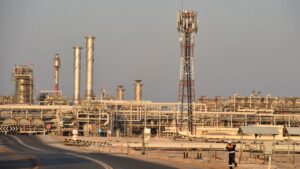
The Gulf region in the Middle East sits at the center of the global energy system, supplying a large share of the world’s oil and natural gas. Countries such as Saudi Arabia, the United Arab Emirates, Kuwait, Qatar, and others have built their modern economies around the production and export of energy resources. Due to this structure, the prospect of a prolonged war involving Iran presents serious economic risks, not only for the region, but also for the global economy that depends on its energy supply. Hydrocarbon exports remain the backbone of most Gulf economies, with oil and gas revenues accounting for a large portion of government income across the region. In Saudi Arabia, for example, petroleum revenues often make up roughly two-thirds of government revenue during periods of strong oil prices. In Kuwait and Qatar, the share is even higher, with hydrocarbons responsible for more than 70 percent of export earnings. These revenues fund government spending in key areas such as infrastructure, social programs, and large-scale economic development initiatives, and thus, any disruption to energy exports threatens the financial stability of these states.
A long and drawn-out war in the region would put that revenue stream at risk in several notable ways. One immediate concern involves physical security for energy infrastructure. The region contains some of the most critical oil facilities in the world, including processing plants, export terminals, pipelines, and offshore production platforms, so even limited attacks on these sites could reduce production capacity or interrupt exports. Previous incidents have shown how vulnerable these systems can be. A single attack on a major processing facility in Saudi Arabia back in 2019 temporarily knocked out about five percent of the world’s oil supply.
Shipping routes also present a major point of vulnerability. Roughly one-fifth of global oil consumption passes through the Strait of Hormuz, a narrow waterway between Iran and the Arabian Peninsula. Tankers carrying crude oil and liquefied natural gas move through this passage every day on their way to markets in Asia, Europe, and North America. If hostilities expand or if Iran attempts to disrupt shipping, even temporarily, the result could be immediate pressure on global energy prices. For Gulf countries themselves, disruptions to exports would translate into sudden massive revenue losses. Many governments in the region maintain financial reserves and sovereign wealth funds designed to buffer economic shocks. However, these reserves are not limitless, especially during prolonged crises. Sustained declines in oil exports would force governments to draw down savings, cut spending, or increase borrowing, carrying significant economic and political consequences.
Investment is another area that would be likely to suffer during an extended conflict. Over the past decade, Gulf states have tried to diversify their economies beyond oil. Major projects in tourism, technology, renewable energy, and manufacturing have been launched as part of long-term development strategies. Yet these initiatives rely heavily on foreign investment and international partnerships, so prolonged war in the region would introduce a high level of uncertainty that could cause investors to delay or cancel projects. Ultimately, even the perception of instability can lead companies to reconsider their commitments.
Insurance costs for shipping and commercial activity also rise sharply during wartime conditions. Tanker operators and cargo companies typically pay higher premiums when operating in conflict zones. If the Gulf were widely viewed as unsafe, transportation costs for energy exports and other goods would increase. These added expenses would eventually pass through supply chains, affecting consumers and industries around the world.
Infrastructure damage presents another serious risk. Military operations near ports, pipelines, or industrial zones could disrupt transportation networks and energy processing facilities. Repairing such infrastructure can take months or even years depending on the severity of the damage, and during that period, production and export capacity would remain constrained. For countries whose public budgets rely heavily on energy income, even short disruptions can create significant fiscal pressure.
Additionally troubling is the fact that the consequences would not remain confined to the Gulf region itself. Global energy markets respond quickly to supply shocks. When oil production falls or when shipping routes are threatened, prices tend to rise as traders anticipate shortages. Higher oil prices affect a wide range of industries, from transportation and manufacturing to agriculture and construction. One likely outcome of sustained energy price increases is higher inflation. As businesses face rising operating costs, they often pass some of those costs on to consumers. Higher transportation costs can make food and manufactured goods more expensive. Airlines, shipping companies, and logistics firms all rely heavily on fuel, meaning that energy price increases can influence the cost of global trade.
Global production could also slow if energy supplies become unstable. Many industries rely on predictable access to fuel and raw materials in order to maintain steady production schedules. Disruptions to supply chains can force factories to reduce output or delay shipments. This kind of slowdown would affect both developed and emerging economies, particularly those that depend on imported energy. Financial markets would likely react as well. Periods of geopolitical instability often spur investors to move funds away from riskier assets and toward safer ones. This shift can reduce investment flows into developing markets, including those in the Middle East. Gulf states that are attempting to expand sectors such as finance, technology, and logistics could see progress stall if investors become cautious about the state of regional stability.
There is also a broader strategic dimension to consider. Gulf countries have spent years attempting to position themselves as stable economic hubs that connect global trade routes between Asia, Europe, and Africa. Cities such as Dubai, Doha, and Riyadh have invested heavily in infrastructure, financial services, and international business networks. A prolonged regional conflict could undermine that reputation for stability, making it more difficult to attract global business in the future.
In conjunction, these risks illustrate how deeply connected Gulf economies are to the global energy system. A protracted war involving Iran would not simply be a military crisis. It would also represent a major economic challenge for the region and for the international economy that depends on its resources. While energy producers may benefit in the short term from higher prices, the broader consequences of sustained instability are likely to outweigh those initial gains. Lost exports, reduced investment, damaged infrastructure, and rising costs could slow economic growth across the Gulf. At the same time, volatile energy markets would create challenges for governments and businesses worldwide. For this reason, policymakers and economists continue to stress the importance of stability in the Gulf. The region’s energy resources play a central role in the functioning of the global economy. Any conflict that threatens that system carries consequences that extend far beyond just the region alone.
Service Members File Complaints Over Dangerous Military Rhetoric That Violates the Constitutional Separation of Church and State
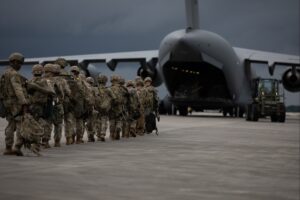
The Military Religious Freedom Foundation (MRFF) – an entity that seeks to protect the constitutional rights of armed service members against unlawful religious influence in their training and military assignments – has reported receiving more than 200 complaints from across all branches of the armed forces over the use of Christian apocalyptic rhetoric by military commanders in their framing of the Iran war. Military leaders have portrayed the conflict as a biblically sanctioned mission, deploying “end-times” language and suggesting that the war was part of a divine plan for triggering Armageddon. Analysts have highlighted that the use of this type of rhetoric is problematic and represents a clear infringement on the principle of religious freedom. Part of the MRFF’s mission is to defend the Establishment Clause of the First Amendment of the U.S. Constitution, which is widely understood to support the idea of the separation of church and state. The recent complaints submitted to the MRFF come from a diverse array of multi-faith groups of armed service members who have expressed grave concern that the rhetoric undermines religious freedom and the belief that military branches must remain neutral when it comes to theology.
According to MRFF, the complaints involve higher-ups in the military using extremist Christian rhetoric while discussing the war in Iran, framing the conflict in terms of a “divine purpose.” One report even alluded to a commander’s claim that the war was meant to help “induce the biblical end of times” – a period leading up to the second coming of Jesus Christ that some believe will be characterized by wars, natural disasters, famines, and other humanitarian crises. The issue with this type of messaging is that there are many different faith groups within the U.S. military and thus attempting to justify a war because of religion is not only unfair to this collective of multi-faith individuals, but it is also not a valid reason to go to war. When American military leaders invoke a specific religious theme or worldview, they are certain to alienate those who do not hold the same beliefs. Involving religion and theology so heavily in this type of setting risks dividing troops along faith-based lines – which also makes it much more difficult to maintain a strong and unified group.
One of the concerns centers around the fact that it is unconstitutional for a U.S. official to impose their religious views on others. The Establishment Clause of the First Amendment to the United States Constitution prohibits the government from “establishing” an official state religion, favoring one religion over another, using government authority (such as military leaders) to promote religious beliefs, or even preferring religion over non-religion – ensuring government neutrality in religious matters. Given that it is a core government entity, the United States military must adhere to this rule. As such, military members who hold positions of power and present war as a divine plan or frame it in biblical terms elevate one religion over others. Whether intentional or not, this can make non-Christian armed service members feel marginalized and pressured to conform to specific religious ideals.
The rhetoric from military leaders is particularly troubling considering the growth of Christian nationalism in political circles. If ideologies like this filter their way into military rhetoric, it can become increasingly difficult to discern between someone’s personal faith and official authority. For example, figures like U.S. Secretary of War Pete Hegseth have elicited alarm for publicly supporting ideas espoused by Christian nationalist Doug Wilson. On social media and news outlets across the United States, Wilson is known for advocating the idea that our government should be governed by Christian principles. He has criticized secularism, Muslim immigration, so-called “liberal Christians,” and other “more modern” beliefs and practices. Regrettably, the rhetoric that he and others like him use creates an “us versus them” narrative that portrays one side as morally good and correct, and the other side as unethical. When this spills over into military rhetoric, it can therefore wrongfully frame war on the basis of religious elements – fueling extremism and intolerance.
Overall, the upwards of 200 complaints received by the MRFF demonstrate that many armed service members see the problem with military leaders using religious rhetoric in a war framing capacity. Doing so violates the core American principle of religious freedom and undermines the rights of armed service members. Maintaining a necessary separation between church and state is essential for professionalism within the military and for protecting religious freedom.

