
The National Interest Foundation Newsletter
Issue 326, March 20, 2026
Welcome to our NIF Newsletter. In this week’s edition, we examine President Trump and Federal Communications Commission (FCC) Chair Brendan Carr’s dangerous efforts to influence media coverage of the Iran war, delve into U.S. allies declining Trump’s request to help secure the Strait of Hormuz, discuss the top U.S. counterterrorism official resigning over the unfounded basis behind the Iran war, and explore how the Trump administration’s $10 billion TikTok deal fee from investors has elicited concern regarding government overreach.
Trump and FCC Chair Carr’s Dangerous Efforts to Influence Media Coverage of the Iran War
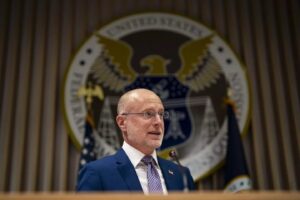
The coordinated efforts by President Donald Trump and Federal Communications Commission (FCC) Chair Brendan Carr to influence media coverage of the Iran war pose a dangerous threat to freedom of the press and the independence of media outlets. Recently, Carr warned broadcasters that they could lose their licenses if they do not “correct course” on their coverage – clearly an alarming tactic aimed to pressure media outlets to cover the conflict in a manner which the Trump administration wants. Press freedom advocates have voiced serious concern with these efforts to intimidate and manipulate coverage, highlighting how they represent a troubling violation to protections guaranteed under the First Amendment and pose a direct threat to the American public’s right to objective information during wartime. By seeking to leverage the regulatory power of the federal government to intimidate news organizations, the Trump administration risks transforming the free press into an arm of state propaganda. For this reason, these actions have been described as undemocratic attempts to manage wartime narratives through government coercion and censorship.
One of the primary dangers in these efforts lies in the Trump administration’s use of the FCC as a tool for political retribution. Chairman Carr’s recent warnings – suggesting that broadcasters could lose their licenses if they air what the administration deems “news distortions” regarding the conflict – weaponize a process that is intended to be unbiased and non-partisan. With respect to the media establishment in the United States, a public interest mandate exists that is designed to ensure that broadcasters serve their communities, and thus, using it to punish specific editorial choices regarding war coverage sets a perilous and dangerous precedent. Therefore, a government official threatening the very existence of a media outlet based on the content of its reporting is completely undemocratic and is what one would expect to find in an authoritarian society.
Even in a case where the administration does not successfully revoke a license, the mere threat creates a chilling effect that could prompt outlets to self-censor in order to avoid regulatory hurdles or costly legal battles. Furthermore, in the context of an active war, this is especially dangerous since if journalists fear that reporting on military setbacks or questions surrounding the government’s actions will lead to their station being shut down, the public is then dangerously deprived of the vital oversight necessary to hold government leaders accountable. Ultimately, a free and democratic society cannot flourish if the press is too intimidated to report the potentially unpleasant truths of a conflict. In a wartime environment, accurate information is critically important, and therefore when the government systematically attacks the credibility of independent observers, it leaves the public vulnerable to misinformation.
The efforts by Trump and Carr to dictate the terms of media coverage are not merely political moves, they are also fundamental challenges to the checks and balances of the American system. By attempting to silence dissent and mandate a certain narrative of reporting through regulatory threats, the administration undermines the very freedoms it claims to defend. Protecting the independence of the press is a necessity for the survival of a transparent and accountable government.
Additionally, the United States is not the only place where independent and impartial coverage of the Iran war faces serious challenges. Throughout multiple countries involved in or affected by the war in Iran, journalists are facing growing restrictions that are shaping how the war is reported and understood. In Israel, wartime reporting is subject to an established military censorship system that has taken on a more active role during the current conflict. Under these rules, journalists are restricted from publishing certain details related to military operations, strike locations, and damage assessments. Reports indicate that these restrictions have expanded in recent weeks, with limits placed on live broadcasts during missile attacks and constraints on showing footage from impacted areas. Some journalists and observers argue that these measures go beyond operational security and limit the public’s ability to fully understand the scale of the conflict and its impacts. Accounts from reporters who have worked in the region describe tight control over access to sites affected by Iranian strikes, including locations where infrastructure has been significantly damaged. These restrictions can prevent independent verification of events, leaving official statements as the primary source of information.
The scale of censorship in Israel is not new, but the intensity appears to have increased alongside the escalation of hostilities. Data from previous years shows that thousands of media items are subject to review by military censors annually, with hundreds fully blocked and many others partially restricted. In wartime conditions, the scope of that system expands, affecting both domestic and international reporting. At the same time, Iran has imposed its own strict controls on information. Authorities have a long history of limiting press freedom during periods of unrest, and the current war has intensified those practices. Reports indicate that journalists inside Iran face pressure, detention, and restrictions on what they can publish about the conflict. In some cases, access to information is restricted at a larger level, with internet disruptions reducing the ability of citizens and reporters to communicate with the outside world.
A near-total internet shutdown during earlier phases of the conflict caused a dramatic drop in connectivity, effectively isolating the country from external reporting channels. These kinds of measures limit not only independent journalism, but also the ability of ordinary people to share firsthand accounts of events on the ground. The result is a fragmented information environment where both sides of the conflict tightly control what can be seen and reported. Journalists operating in the region often face a combination of official restrictions, safety risks, and limited access. In certain areas, reporters have been detained or prevented from moving freely, further complicating efforts to gather accurate information. When direct reporting is restricted, news organizations often rely more heavily on official statements, secondhand accounts, or footage that has been approved for release. This can create gaps in coverage and make it more difficult for audiences to assess the full scope of the conflict.
Press freedom advocates have raised concerns that wartime censorship is being used not only to protect sensitive information, but also to shape public perception. In situations where governments control access to key details, there is a risk that reporting becomes aligned with official narratives rather than independent verification. Analysts warn that this dynamic can influence how the conflict is understood both domestically and internationally. In highly charged conflict environments, self-censorship can also play a role. Journalists may avoid certain topics or language due to fear of losing access, facing legal consequences, or putting themselves at risk. This can further narrow the range of independent and impartial perspectives that reach the public. Advances in technology have made it easier to share information quickly, but they have also increased the ability of governments to monitor, restrict, and shape that information. Control over communication channels has become a strategic tool, used alongside military and diplomatic efforts.
For all of these reasons, there is a growing demand for transparency. Audiences seek and expect real-time updates and visual evidence, especially during major international conflicts. When access is limited, it can lead to skepticism about official narratives and increase the spread of unverified information on social media. In the absence of reliable and uncensored reporting, misinformation can fill the gaps. Governments argue that certain restrictions are necessary to protect military operations and civilian safety. Critics counter, however, that excessive control over information can obscure the human and material costs of war. For journalists, the environment remains difficult and often dangerous. Reporting from conflict zones has always carried risks, but the added layer of censorship creates additional challenges. Without access to key locations or the ability to publish freely, the role of the press becomes more constrained. As the war continues, the struggle over information is likely to remain a defining feature of the conflict. What is reported, what is withheld, and how stories are framed will shape public understanding of events on the ground.
U.S. Allies Decline Trump’s Request to Help Secure the Strait of Hormuz
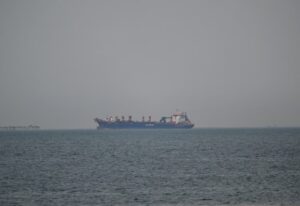
Across the board, major U.S. allies have declined President Trump’s request to send warships to help secure the Strait of Hormuz. The refusal stems from a combination of strategic, legal, and political concerns aimed at avoiding further escalation of the ongoing conflict with Iran. A host of countries have been adamant and direct in their underscoring that they seek to play no part in the war – fearing that joining a Trump-led naval mission would draw them into the ongoing U.S.-Israeli conflict with Iran. As many European partners of the United States in particular have sought to highlight, The North Atlantic Treaty Organization (NATO) is a defensive alliance and therefore also lacks the legal mandate to take part in an offensive war of choice in the Middle East. Additionally, key U.S. allies like Germany and Japan both have strict post-WWII legal frameworks that require legislative oversight through parliamentary authorization for military action operations.
On top of the fear that deploying naval forces to the Strait of Hormuz would be deemed an act of escalation that could trigger an even wider-scale conflict, U.S. partners and allies have relayed other important reasons for why they oppose involvement. Many have noted that they were not consulted by the United States or Israel before the current war was launched, and thus, there is an overwhelming sentiment that the conflict is not one of their choosing. There is also a clear absence of a legal mandate for broad participation in the war from any type of collaborative global entity such as the United Nations, European Union, or NATO. Furthermore, most American allies have voiced a preference for internationally-coordinated efforts and diplomatic solutions to the Strait of Hormuz crisis – rather than one which involves the use of military force. All of this has prompted countries like France, the United Kingdom, Germany, Spain, Italy, Japan, South Korea, Australia, and others to either formally reject the Trump request or remain noncommittal, reflecting a wide consensus of opposition towards the notion of getting involved in the war efforts.
Perhaps one of the main driving factors behind the widespread opposition is due to the belief that the Iran war is an offensive military operation. Stefan Kornelius, spokesperson for German Chancellor Friedrich Merz, told media outlets this week that “NATO is a defensive alliance, used to defend its territory.” Indeed, the purpose of NATO is to protect the states involved through collective defense, which is why there are specific rules members follow to protect the nature of this partnership. Many critics point out that the Trump administration has broken the UN Charter and these established global mechanisms when they decided to launch an attack on Iran – as the strikes do not meet the criteria for self-defense and the administration did not seek the approval of NATO members before initiating the attacks. This has become a central point of frustration among U.S. allies. Germany and the United Kingdom in particular have voiced their contention that NATO countries should have no role in policing the Strait of Hormuz – especially given that those in the partnership were not consulted beforehand. At the domestic level, the Trump administration’s decision to act without congressional approval raises further questions about overreach and the lack of legality for the attacks. Prior to them being initiated, reports had suggested that a U.S.-Israeli attack would garner heavy retaliation from Iran that risked severe regional escalations – yet these concerns were not heeded. As a result, allies are understandably opposed to being asked to assist efforts in a conflict that they did not approve nor want to be involved in.
It is not surprising that leaders of U.S. allies are hesitant to involve their naval assets for an operation in the Strait of Hormuz. Committing to war efforts drain resources, put countless lives at risk, harm diplomatic relationships, and are ultimately destabilizing to any party involved. For these countries, entering a war without a clear exit strategy is not worth the cost. The economic consequences are already being felt globally through the rise in oil prices. Markets are fragile right now as well, which increases the likelihood of inflation and economic strain. Thus, for American allies and partners, deepening involvement in a conflict that has already had wide-ranging negative ramifications is both unappealing and dangerous. There is also weariness considering that Trump has initiated unpopular unilateral decisions in the past, including pulling out of the Paris Climate Accords and raising tariffs, actions which have already made U.S. allies question the reliability of the U.S. administration and its approach to various key issues. Choosing to launch a dangerous war over diplomatic engagement seems unwise and unnecessary to many, particularly when there appears to be no long-term strategy or endgame to this conflict.
Top U.S. Counterterrorism Official Resigns Over the Unfounded Basis Behind the Iran War

Joe Kent’s resignation from his position as Director of the National Counterterrorism Center in the Trump administration has drawn attention, not just because of its timing, but because of what it represents. His departure comes in the midst of an active U.S. military campaign against Iran and follows years of close political alignment with President Trump. For many observers, the significance of the move also lies in the fact that Kent was not a frequent critic of the current president. On the contrary, Kent built his political identity in large part through his loyalty to Trump and his positions on national security and foreign policy. A former military officer and congressional candidate, he aligned himself with the administration’s ideologies, including a more restrained approach to foreign intervention. He supported many of Trump’s earlier policies and was viewed as part of the president’s inner circle of trusted allies on security issues.
All of this is what makes his resignation stand out. In a public statement posted online, Kent wrote that he could not “in good conscience” support the war with Iran. He expressed – as many others have both within and outside the U.S. intelligence community – that Iran did not pose an imminent threat to the United States and suggested that the decision to move forward with military action was influenced by external pressure rather than clear national security necessity. These remarks directly contradict the administration’s justification for the conflict and shed light on the unfounded basis behind the Iran war. This was not a quiet exit or a vague disagreement. It was a clear break on a defining issue. For someone like Kent, who had previously stood behind Trump on a wide range of policies, the Iran war appears to have been a turning point and demonstrates the extent to which Trump’s decision to initiate the conflict has garnered serious concern and opposition.
Kent’s position shows a strand of thinking within parts of Trump’s political base that has long been skeptical of large-scale and open-ended military involvement in the Middle East. During earlier campaigns, Trump himself often criticized past wars in Iraq and Afghanistan and argued against prolonged foreign entanglements. Kent’s views had generally aligned with that approach. His resignation suggests that he sees the current conflict as a departure from those earlier principles and promises. The timing of the decision also raises questions about internal debate within the administration. Disagreements over foreign policy are common, but they are rarely expressed publicly in such direct terms by individuals closely tied to the president. Kent’s statement suggests that at least some figures within Trump’s orbit are not aligned on the direction of the Iran campaign and the motivations behind it. At the same time, his ability to step away without immediate disruption highlights the structure of U.S. national security institutions. Military operations continue through established chains of command, and policy direction is shaped by a network of officials and agencies. Essentially, the system is designed to absorb changes in personnel, even during active conflicts.
Still, the political implications may be more significant than the operational ones. The war with Iran is already a divisive issue among voters, and Kent’s resignation adds a new dimension to that debate. His criticism comes from within the president’s own circle, not from longstanding political opponents. That distinction may give his remarks added weight, particularly among previously loyal voters who now share similar concerns about foreign intervention. His reference to external pressure is also likely to draw attention due to the fact that a host of others have already voiced concern over Israel’s role in dragging the United States into the conflict with Iran. The valid and wide-ranging contention that outside influence played a massive role in the decision to go to war raises questions about the manner in which policy choices are made and how they are often carried out at the behest of others to the detriment of the United States’ own national interests. Given Kent’s high-profile and eye-opening resignation, these concerns will likely be debated further as the conflict continues.
For the administration, the impact is likely more hurtful to their perception than any immediate policy change. Military operations are continuing, and there has been no indication that strategy will shift as a result of his departure. However, the resignation shows Americans that there is even significant internal disagreement over the basis behind the conflict, at a time when the administration is already struggling heavily to try and project a clear and consistent message regarding the reasoning for the war and its objectives.
Trump Administration’s $10 Billion TikTok Deal Fee from Investors Elicits Concerns Regarding Government Overreach
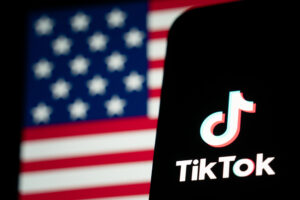
The Trump administration is set to receive a $10 billion “brokerage fee” from investors for a TikTok restructuring deal, which has raised serious concerns over U.S. government overreach, lingering Chinese government influence, and a lack of transparency from both the Trump administration and TikTok. Some of the primary issues that critics have regarding TikTok relate to its parent company, ByteDance. Lawmakers from both parties have relayed unease over the prospect of TikTok potentially sharing U.S. user data with the Chinese government or influencer content through its tailored algorithm. These fears led to the 2024 “ban or sell law,” which resulted in a series of legal battles and lawsuits – but at the end of the year, the ban was not enforced. However, things have changed now that President Trump has signed an executive order saving TikTok from the ban. Despite this, the same security concerns from before, that were widely considered to be legitimate, are being brought up again – and this is why the latest $10 billion transaction poses issues for many people.
Problems with governmental overreach are a core part of critics’ contention with the deal, especially when it comes to freedom of speech/privacy and the role of the state in the media. Under this new deal, the U.S.-based TikTok would take on responsibility for monitoring content, which indirectly gives online platforms the potential to influence people both politically and in other ways, depending on what their agenda is. This would allow companies the ability to essentially influence the algorithm – a worrying thought given that TikTok has over 150 million users. The platform is a large source of entertainment for many people, and it is also a major channel for news, culture, and other key societal aspects. Thus, giving any administration forms of influence over content moderation raises serious First Amendment concerns.
Another point of worry with this deal is that there is no clear legal precedent for the federal government to collect such a large fee for facilitating a private business deal. To put this in perspective, the government is taking a cut that is around 70% of the company’s valuation. Critics, including U.S. Senator Mark Warner (D-VA), have questioned whether this is legally authorized at all, or whether it is considered an unconstitutional “pay-to-play” arrangement. At the same time, the deal does not resolve any previous national security concerns it was supposed to address back in 2024. In fact, ByteDance is expected to retain about a 20% stake and continue licensing its algorithm, which is considered by many to be the most important aspect of the platform. On top of that, if this kind of large fee is normalized, it could set a precedent where the U.S. government is allowed to insert itself into other private deals as a financial beneficiary, which raises a whole set of legal and ethical questions.
Finally, there is the issue of transparency, or the lack thereof. Both the Trump administration and TikTok have been relatively vague about how this deal was structured, how the $10 billion figure was determined, and what rules are actually in place to limit privacy and freedom of speech violations. The involvement of politically connected investors, including Larry Ellison of Oracle, has also intensified scrutiny. Ellison is a big Trump supporter who has advised the president on technology-related operations and has held fundraisers for him in the past. The perception of insider access and preferential treatment undermines public trust and raises ethical concerns, not to mention questions about how far the government should go in intervening in private markets. Having the power to extract billion-dollar fees, influence ownership dynamics, and potentially affect platform governance starts to look like questionable participation in society and the economy. This kind of shift could have long-term consequences, from discouraging foreign investment to setting unheard-of precedents. In the end, the TikTok deal does not quell national security concerns, it seeks to reshape the relationship between the administration, technology platforms, and the wider public at large – and that is precisely why it is proving to be so controversial.

