

The National Interest Foundation Newsletter
Issue 328, April 3, 2026
Welcome to our NIF Newsletter. In this week’s edition, we explore how the Iran war has created a growing rift within the “Make America Great Again” (MAGA) coalition, look into why Pentagon preparations for weeks of ground operations in Iran have prompted concern regarding the risk of further U.S. entanglement, examine the nationwide “No Kings” protests across the United States which have highlighted the massive scale of anger and backlash towards Trump’s policies, and discuss the Israeli Knesset’s passage of a discriminatory death penalty bill in complete violation of international law.
Iran War Creates Growing Rift Within the MAGA Coalition

Political observers have recently drawn attention to how the Iran war has created a major rift within President Trump’s “Make America Great Again” (MAGA) coalition. The fracture has become increasingly evident over the preceding weeks since the onset of the war, as critics have labeled the conflict as a betrayal of MAGA’s “America First” ethos. Perhaps most notably, an undeniable generational divide has emerged among members of the movement. While the MAGA electoral base that carried Trump back into office has long prided itself on loyalty to the president, the Trump administration’s divisive initiation of the conflict with Iran has presented significant challenges to the MAGA movement. The rift has become highly visible at conservative political conferences, where activists and speakers have raised serious concerns about the war.
This tension has been especially prevalent among Trump’s younger followers. At recent conservative gatherings, conversations have been dominated and overshadowed by contentions over the war, with multiple panels and attendee interviews at Conservative Political Action Conference (CPAC) USA 2026 reflecting anxiety about the prospect of prolonged conflict. For a sizable segment of the MAGA movement, the possibility of yet another “forever war” or protracted military engagement is a betrayal of the core principles they supported the current administration for. The fear is not only about strategy, but about returning to what many see as a failed model of interventionism. With Trump’s decision to skip CPAC for the first time in a decade, many see further proof of the clear MAGA rifts over the Iran war that have been on full display.
Trump built much of his appeal on opposition to foreign wars, presenting himself as a candidate who would avoid overseas engagement, especially in the Middle East – a messaging point that he emphasized repeatedly during his 2016 and 2024 campaign rallies. This resonated strongly with voters wary of recent protracted U.S. military engagements in places like Iraq and Afghanistan. Now, as the United States finds itself engaged in an escalating conflict with Iran, many of those same supporters are questioning whether that promise has been broken, particularly amid the array of U.S. strikes on Iranian-linked targets and the subsequent large-scale troop mobilizations in the region.
Rising energy prices have also become a significant point of criticism, especially among working- and middle-class voters. As gas prices climb and the economic ripple effects spread, the connection between foreign policy and everyday costs has become harder to ignore, with recent national averages rising noticeably in the weeks following the escalation. Even supporters who remain sympathetic to the administration’s purported reasons for initiating the conflict are expressing their concerns in settings such as voter interviews and town hall discussions where inflation and fuel costs dominate questioning.
Some MAGA supporters remain firmly aligned with Trump, viewing criticism as premature or politically motivated, a sentiment echoed by several Republican lawmakers in recent media appearances. Others are more conflicted, supportive of the president but uneasy about the direction of policy. A smaller but growing group is openly disillusioned, questioning whether the movement still reflects its original priorities, a divide increasingly visible in online conservative forums. Media figures and political influencers within the conservative ecosystem are also reflecting this divide. While some continue to promote a hardline stance, others have begun to voice skepticism, particularly about the risks of escalation, including prominent commentators who have warned against repeating past U.S. interventionist mistakes. This debate is notable because it is taking place within a movement that has historically emphasized unity and message discipline. Younger conservatives, many of whom came of age during the later years of the Iraq and Afghanistan conflicts, tend to be more wary of military intervention. Their skepticism is not necessarily rooted in isolationism, but in a desire to prioritize domestic concerns over foreign engagements. Older voters, by contrast, are often more receptive to arguments centered on strength, deterrence, and strategy, a divide reflected in generational splits found in polling data as well.
Overall, public opinion polling across the United States has leaned against the conflict, with majorities expressing concern about both the immediate risks and the potential for a longer war. For example, recent national polls have shown that a clear majority of Americans oppose expanded military action against Iran, while surveys indicate that even among Republican voters, support drops when the possibility of a prolonged ground conflict is introduced. Within Trump’s base, support remains higher than in the general population, but even there, the expectation of a limited engagement appears to be giving way to concern about escalation.
Midterm elections are approaching, and internal divisions could complicate efforts to present a unified message. If dissatisfaction continues at this rate, it may dampen turnout or create openings for challengers within the party, particularly in competitive primary races where foreign policy has become an unexpected point of contention. For now, supporters are weighing competing priorities: loyalty to a leader, skepticism of foreign wars, and concern about economic stability. How these tensions persist will shape not only the future of Trump’s presidency, but the direction of the MAGA movement that has defined Republican politics for the past decade.
Pentagon Preparations for Weeks of Ground Operations in Iran Prompt Concern Regarding the Risk of Further U.S. Entanglement
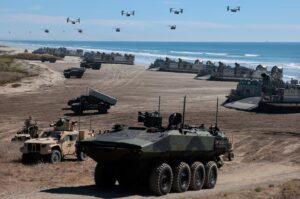
As the Iran war enters its second month, recent reports of Pentagon preparations for weeks of ground operations have prompted concern regarding the risk of further U.S. entanglement. The prospect of this marks a critical inflection point in the conflict and has sparked debate among military analysts and other observers about the potential impacts these operations would have. Over 50,000 U.S. troops are already stationed in the region, and earlier this week, the Pentagon ordered several thousand additional troops from the 82nd Airborne Division to be deployed to the Middle East. Furthermore, fresh deployments have included troops from the Boxer Amphibious Ready Group and the Tripoli Amphibious Ready Group. These amphibious ready groups (ARGs) carry U.S. Marines and can launch invasions from the sea to land. Analysts do point out that these arrivals are not necessarily indicative of a ground invasion, as it is more likely that these troops would be assigned with specific and special short-term missions such as seizing key sites like Kharg Island or other smaller islands near the Strait of Hormuz. Controlling these locations would give the United States a strategic advantage due to the fact that they contain most of Iran’s oil exports, however, even if these operations are successful, they do not guarantee that the Strait of Hormuz will reopen. In this scenario, Iran could still control the waterway by disrupting shipping with missiles and naval attacks. Instead, reopening the Strait would likely require long-term naval protection instead of short-term seizures of nearby land, and many Americans are weary about the possibility of such sustained conflict in the Middle East.
Analysts have also suggested that the U.S. military might attempt to move forces to extract uranium from Iran, though this option would be more difficult, as it would require American troops to deploy inside the country. Experts contend that it would be challenging to hold any island for more than a few days and that the U.S. would likely have to lean on allies for support in order to fully open the Strait. Over the preceding weeks, major U.S. allies have of course conveyed serious reluctance to do so for risk of being dragged directly into the conflict. This is extremely significant because without allied naval and logistical support, the United States would likely struggle to maintain long-term control over the Strait of Hormuz on its own.
U.S. allies like the United Kingdom have held virtual meetings with international representatives to discuss reopening the Strait of Hormuz, while U.S. President Trump has avoided directly addressing NATO and instead shifted responsibility to other nations. These meetings have included more than 30 countries and focus on diplomatic solutions over military action, reinforcing that American partners do not want to risk any type of further escalation. The fact that the United States is not part of these discussions highlights the lack of communication and absence of a clear or unified strategy to reopen the Strait.
While the Trump administration’s strategy remains uncertain, it is clear that the costs of war, both human and financial, continue to grow. So far, there have been a reported 13 American deaths and over 200 wounded, and the prospect of initiating ground operations would pose a grave risk to the lives of American servicemembers. For context, U.S. ground operations in Iraq resulted in more than 4,400 deaths and over 30,000 wounded, alongside hundreds of thousands of Iraqi casualties. Iran’s population is nearly four times larger, and thus, the potential scale of an expanded conflict there could be catastrophic. Financially, the Department of Defense reported that within the first six days of the conflict alone, the U.S. spent close to $11.3 billion, with the White House seeking hundreds of billions more in military funding. The war was already unpopular among most Americans due to a host of reasons including the lack of clear objectives and motivations for it. On top of this, should it become a quagmire with no exit strategy and drain U.S. resources at such extreme levels, it is likely that the backlash against the war will become even more severe and pronounced.
Ultimately, most analysts contend that specialized ground operations may be enough to secure the Strait of Hormuz for a short period of time, but without allied support or a more prolonged U.S. ground presence, it is highly unlikely that this could be maintained. As such, even specialized ground operations or limited-duration raids that are intended to only be short-term missions run the dangerous risk of undesirable and detrimental further U.S. entanglement in the conflict.
Nationwide “No Kings” Protests Across the U.S. Highlight the Massive Scale of Anger and Backlash Towards Trump’s Policies
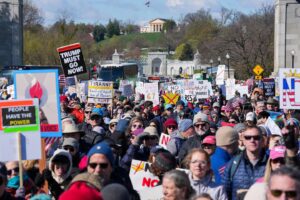
The nationwide “No Kings” protests which took place throughout the United States last weekend illustrated the massive scale of anger and backlash towards the policies of the second Trump administration. The demonstrations saw record numbers of participants, drawing an estimated 8 to 9 million Americans across more than 3,300 sites in all 50 states, in what has been deemed the largest single-day protest in U.S. history. While airing an array of grievances, one of the primary catalysts for this latest “No Kings” mobilization was the now more than a month-long conflict with Iran, with protesters voicing fierce opposition to what many Americans view as an unwarranted and senseless war. Furthermore, one of the most significant developments surrounding the protest movement is its reach and expansion into traditionally conservative strongholds as opposed to merely being a phenomenon among major cities. In fact, organizers have indicated that an estimated two-thirds of the recent late March events occurred outside of major urban centers – representing a 40% uptick in participation from smaller towns since the first iteration last summer. Republican-leaning states such as Texas, Florida, and Ohio each held more than 100 events, while typically conservative regions in others like Utah and Idaho witnessed double-digit numbers of demonstrations. As analysts have sought to point out, the inclusion of residents in these types of areas suggests that the administration’s policies and actions are alienating segments of the electorate that normally gravitate towards the Republican Party.
For many observers, the scale of the protests speak to the growing and undeniable frustration felt across the United States. The unpopular Iran war, Trump’s enforcement of immigration policy, and the rising costs of housing, healthcare, and other daily necessities have fueled the far-reaching anger. Recent polling data shows that upwards of 60% of Americans disapprove of Trump’s military actions in Iran. While one would expect this among Democratic-leaning citizens, there is increasing evidence that within Trump’s own base, there is growing dissent regarding this as well. All of this is due to the belief that the administration’s decision to initiate the war sidelines serious domestic areas of concern like the state of the economy and the rising cost of living. Instead, the war has exacerbated these already existing issues, draining U.S. resources, sparking an increase in the price of oil, gas, and other amenities, risking the lives of American service members, and shifting focus away from concerns that should be addressed at home.
The anger and backlash also come at a consequential time, with midterm elections that will likely determine the nature of the remaining Trump presidency only seven months away. Thus, many feel that should the Iran war and other areas of voter dissatisfaction drag on, Trump risks suffering major electoral setbacks in November. The eye-opening number of seats that Democrats have already flipped from Republicans in recent elections serves as another warning and indicates that the president has lost a substantial amount of support from among his own base. Trump’s own district in Florida where his Mar-a-Lago estate is now has a Democratic state representative following a recent special election. Additionally, figures like Joe Kent and Tucker Carlson – who have in the past largely been supportive of the president – have begun to voice opposition to what they see as a clear betrayal to the “America First” ethos. Both have also been critical of the factors driving Trump’s foreign policy decisions, expressing concern with how external forces outside of the United States such as Israel have played a destructive role. Kent, Carlson, and others are among the growing number of Republicans who are weary of protracted and drawn-out U.S. military entanglements – the main issue that has been propelling the ongoing rift among those within Trump’s base.
For all of these reasons, many view the “No Kings” protest movement as more than just a momentary surge of dissent and instead as proof of the increasingly widespread anger towards the Trump administration. With momentous elections on the horizon, the backlash serves as a fundamental challenge to the remainder of the Trump administration’s second-term agenda. If these trends persist, they pose a serious threat that Republicans will lose control over both houses of U.S. Congress. Whether this anger and backlash translate into electoral consequences in the upcoming midterms remains to be seen, but for now at least, it serves as a major warning ahead of them.
Israeli Knesset Passes Discriminatory Death Penalty Bill in Complete Violation of International Law
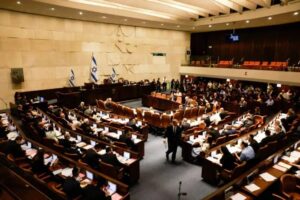
The passage of a new death penalty law by the Israeli Knesset has triggered intense international denunciation and outcry, with critics highlighting how the measure represents one of the most blatant examples yet of unequal and discriminatory legal standards applied within the Israeli system. The legislation, which expands the use of capital punishment, has drawn condemnation not only for its severity and unlawful nature, but for the way it is expected to be applied in practice. Many argue that the law is inherently discriminatory. Its enforcement is widely expected to fall almost exclusively on Palestinians. Israeli settlers living in the illegally occupied West Bank are subject to civilian courts, while Palestinians are prosecuted in military courts. This dual structure has long been cited by human rights organizations as evidence of an apartheid two-tier system of justice. The introduction of a death penalty law within this raises concerns that the most severe punishment available will be disproportionately, if not exclusively, imposed on one population.
Legal scholars and advocacy groups have pointed out that such a system with these types of policies reinforces arguments that Israel operates in a manner consistent with apartheid, a term used by prominent and reputable organizations such as Amnesty International and Human Rights Watch in their recent assessments of Israeli governance in the illegally occupied territories. The addition of capital punishment to this already unequal legal structure is further entrenching systemic disparities, rather than addressing longstanding concerns about the absence of fairness and due process. International humanitarian law, particularly the Fourth Geneva Convention, places strict limits on the use of capital punishment in occupied territories. These restrictions include requirements for fair trial guarantees and limitations on the types of offenses that can carry the death penalty. Critics argue that Israel’s military court system, which would likely be responsible for adjudicating many of these cases, does not meet these standards.
Further fueling the concern over the recent law’s passage is the fact that human rights advocates have long documented issues regarding the fairness of trials – or lack thereof – faced by Palestinians in Israeli military courts. Several reports note frequent inequities such as limited access to legal representation, reliance on coerced confessions, and high conviction rates. In this context, the expansion of the death penalty heightens fears that irreversible punishments could be carried out in a system that is already viewed as unjust and lacking fundamental safeguards. The stakes of these longstanding concerns are significantly exacerbated when the outcome of a trial could be execution.
Comparisons have also been drawn to historical systems of racial segregation, particularly Apartheid in South Africa. Critics note that even under apartheid rule, South Africa did not implement law that so explicitly aligned the harshest penalties with a separate and unequal judicial system for a specific population under military control. While apartheid South Africa used the death penalty extensively, it did so within a single court system, rather than one that formally separated populations into different legal tracks based on identity and territorial status.
International reaction has been swift and wide-ranging. Governments across Europe have expressed condemnation, with several foreign ministries issuing statements warning that the move undermines prospects for stability and violates Israel’s obligations under international law. The European Union has reiterated its continued opposition to the death penalty in all circumstances, while also emphasizing the need for equal application of justice. Similar criticisms have emerged from officials and advocacy groups in other parts of the world, reflecting a rare degree of consensus on the issue.
The backlash is not limited to state actors. Legal experts, civil society organizations, and former diplomats have warned that the law risks further isolating Israel on the global stage. Some have argued that it could expose Israeli officials to increased scrutiny in international legal forums, including potential challenges linked to violations of human rights conventions. Others suggest that the move may deepen divisions and reduce the already limited prospects for advancements in the peace process. Within Israel itself, the legislation has sparked debate among legal professionals and political figures. Critics point to how the law formally codifies undemocratic and unjust Israeli policies and practices. Ultimately, the outrage surrounding the Knesset’s decision is not only about the death penalty itself, but about the flagrant lengths to which Israel is going to entrench a systematic and institutionalized discriminatory system against Palestinians.

