
The National Interest Foundation Newsletter
Issue 329, April 10, 2026
Welcome to our NIF Newsletter. In this week’s edition, we provide analysis on the two-week U.S.-Iran ceasefire deal and the prospects of it lasting, examine the negative consequences stemming from the initiation of the Iran war without a legal basis and the threats of unlawful actions, delve into the Iran war and its triggering of major inflation warnings, and explore how wealthy donors are hiding political money in secretive nonprofits.
The Two-Week U.S.-Iran Ceasefire Deal and the Prospects of It Lasting
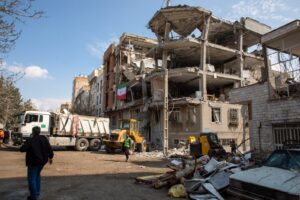
The recently announced ceasefire between the United States and Iran has offered a temporary pause in a rapidly escalating conflict, but questions about its durability remain. While the agreement has reduced immediate fears of continued strikes, early indications suggest that the underlying conditions necessary for a lasting peace are still far from being resolved. The agreement establishes a roughly two-week halt in hostilities, with the expectation that negotiations will take place during this window. Some notable provisions include a pause in military operations and the reopening of critical shipping routes such as the Strait of Hormuz, a vital artery for global energy supplies. Yet this structure highlights one of the central challenges facing the agreement. It is not a comprehensive peace deal, but rather a temporary framework intended to create space for further talks.
That distinction is critical because the disputes that fueled the conflict, of course, still remain unresolved. The United States continues to push for constraints on Iran’s nuclear and missile programs, while Iran is seeking sanctions relief, security guarantees, and recognition of its regional position. Analysts note that both sides are entering negotiations with demands that are not easily reconciled, raising doubts about whether meaningful progress can be achieved within such a short timeframe. Adding to this uncertainty is the presence of competing interpretations of the agreement itself. Officials in Washington and Tehran have offered differing accounts of terms, particularly regarding control over strategic waterways and the extent of military de-escalation. This lack of clarity has already created friction, with each side portraying the ceasefire in a way that aligns with its own political narrative. Such ambiguity can hurt trust and increase the likelihood of miscalculation.
Events on the ground further show the fragility of the situation. Despite the formal announcement of a ceasefire, regional tensions have not fully subsided. Military activity involving allied groups and neighboring areas continues to threaten stability, and disagreements over whether these actions fall within the scope of the agreement have already emerged. In practice, this creates a scenario where the ceasefire exists on paper but remains vulnerable to collapse due to actions outside its narrow terms. Recent reports indicate that both sides are presenting the ceasefire as a form of victory, a dynamic that can complicate negotiations by making concessions politically costly. At the same time, continued disruptions in critical areas such as maritime shipping through the Strait of Hormuz suggest that the effects of the agreement remain limited. Accusations of violations have also arose, with Iranian officials claiming that actions by the United States and its allies have already violated the terms of the deal.
Further fueling the complexity and uncertainty surrounding the deal is the fact that the conflict is not confined to Iran and instead involves a network of alliances and relationships that extend across the Middle East. Actions taken by these states, whether coordinated or independent, have the potential to derail the agreement, as witnessed by continued Israeli attacks on Lebanon. This complexity makes enforcement particularly difficult, as there is no single mechanism capable of ensuring compliance across all parties involved. Previous ceasefires involving Iran and its regional adversaries have often been marked by initial violations followed by periods of uneasy stability. In some cases, agreements have held longer than expected despite early tensions. In others, they have quickly unraveled under the weight of unresolved grievances. As of now, the current ceasefire appears to be a mixture of both.
In the United States, President Trump faces pressure to demonstrate strength while avoiding a prolonged conflict, a balance that can influence negotiating positions. In Iran, leadership must also navigate internal expectations, where public messaging has predominantly consisted of resilience and resistance. These dynamics can limit flexibility on both sides, making compromise more difficult. There are, however, factors that could support the ceasefire’s continuation. The economic costs of the conflict so far have been significant for all parties involved, creating an incentive to avoid further escalation. Global pressure, including calls for de-escalation from international organizations and allied governments, may also encourage restraint.
As it stands, the agreement has succeeded in halting immediate hostilities, but it has not addressed the deeper issues at the heart of the conflict. Without progress on these fundamental questions, the risk of renewed confrontation remains high.
Negative Consequences Stemming from Initiation of the Iran War Without a Legal Basis and the Threats of Unlawful Actions
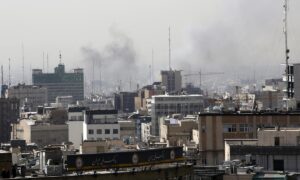
In the weeks since the onset of the Iran war, international law experts have consistently outlined the illegality of the conflict’s initiation and the host of negative consequences stemming from this. Launched in the absence of a mandate from the UN Security Council, the war has undermined the global rules-based order, alienated key allies and partners, damaged the United States’ reputational standing on the world stage, and set a dangerous precedent for potential future illegal military actions and wars of aggression. This has prompted observers to label the conflict as a “war of choice” which in addition to its troubling death toll has also paralyzed global markets, decimated regional economies, and weakened the international structures designed to prevent such destructive escalations. On top of the lack of legality surrounding its initiation, many have voiced alarm at the dangerous rhetoric and threats of unlawful actions – from U.S. President Donald Trump in particular. Trump has issued a series of unsettling and disturbing threats against Iran that legal experts, international organizations, and others have warned would constitute war crimes and violate international law. These have included ones involving the deliberate targeting of Iranian civilian targets and infrastructure.
Standards of international law require parties at war to distinguish between military and civilian targets. Thus, Trump’s blanket threats against infrastructure such as bridges and power plants ignore this principle. Furthermore, locations that are deemed indispensable to the survival of a civilian population – like water plants and installations – are granted special protection under Article 54 of Additional Protocol I to the Geneva Conventions. Human rights experts have therefore noted that threatening to destroy these types of sites suggest an intent to carry out indiscriminate attacks, which are prohibited. There is also the issue of “recklessness,” which itself is considered a war crime under international law. For example, many have applied this to the case of the U.S.-led airstrike that struck a primary school in Minab and killed over 100 children – if not intentional, then it is a reckless act at best, which is unlawful as well. Even in circumstances where a location has “dual usage” (both military and civilian), the principle of proportionality forbids attacks where the expected incidental loss of civilian life or damage to civilian objects would be excessive in relation to any anticipated military advantage. Article 2(4) of the UN Charter also prohibits the use of force against the territorial integrity or political independence of another state. Since impartial observers have noted that Iran did not pose an imminent threat, the right of self-defense – one of the rare exceptions to this – does not apply. Without clear evidence of an imminent threat to prompt the type of unsolicited attacks that sparked the outbreak of the war, the strikes which initiated the conflict to begin with cannot be justified as actions of self-defense.
The manner in which the war has been conducted as well as that of its initiation in the first place have alienated key allies, hurt the United States’ global standing, and set a dangerous precedent for potential future illegal military actions. The conflict has been widely criticized by international law experts and diplomats for bypassing established multilateral frameworks. U.S. allies in Europe, the Gulf, and East Asia have refused to join the war efforts, with Gulf partners in particular being placed in precarious positions and becoming targets of Iranian retaliatory strikes. Additionally, the lack of clear objectives and an exit strategy have led to widespread opposition to the war – both globally and domestically within the United States. Analysts have warned that the conflict has risked being used as a standard for state-led military intervention moving forward, paving the way for others to initiate future wars of aggression.
All told, the consequences of the Trump administration’s actions in Iran could have lasting negative impacts. There has already been an evident rift created between the United States and many of its traditional partners over the conflict, which might make it harder in the future to collaborate on wide-reaching initiatives and deter behavior that threatens global stability. Given this, it is not at all surprising that the war efforts have raised concerns regarding how they actively undermine and degrade the norms of international law, eroding trust amongst U.S. allies and increasing the chances of more commonplace and prolonged conflict.
The Iran War and Its Triggering of Major Inflation Warnings
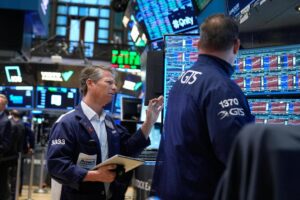
The conflict in Iran has prompted growing concern among economists who warn that the global economy may be now entering a new period of pressure. One of the most immediate drivers of fear over inflation is the impact that it has had on oil and energy prices. Iran plays a huge role in global energy supply chains, both directly through production and indirectly through its position near shipping routes such as the Strait of Hormuz. As tensions rise and the risk of disruption increases, oil markets have reacted with volatility, pushing prices upward. Higher energy costs tend to filter through the entire economy, increasing transportation expenses, manufacturing costs, and ultimately consumer prices.
This dynamic has led major financial leaders to issue unusually direct warnings. Jamie Dimon recently cautioned that geopolitical instability tied to the conflict could have lasting economic consequences, including sustained inflation and reduced growth. His remarks reflect a wider concern among banking and investment leaders who see the current moment as uniquely fragile. The combination of geopolitical risk and existing economic vulnerabilities is raising the likelihood of a more prolonged downturn. Additionally, Christine Lagarde has warned that the conflict is already having a measurable effect on inflation in Europe. This assessment is particularly significant because it suggests that the impact is not limited to regions directly involved in the conflict. Instead, it is being transmitted globally through interconnected markets, affecting economies that rely heavily on imported energy and commodities.
Food prices are another major pressure point. The conflict has disrupted supply chains for key agricultural inputs, including fertilizers derived from nitrogen and other chemical compounds linked to energy production. As costs for these inputs rise, farmers face higher production expenses, which are then passed on to consumers. This creates a chain reaction that can elevate the price of basic goods, even further contributing to that inflation. In regions already experiencing economic strain, these increases carry the risk of deepening food insecurity. International financial institutions are increasingly vocal about these risks. The World Bank has expressed concern that the conflict could trigger a combination of inflation, job losses, and slower growth across multiple regions. Such warnings show us there is a possibility that the current situation may not remain contained, but instead evolve into a more systemic, economic challenge. Surveys conducted in recent weeks indicate that households are becoming more pessimistic about the economic outlook. This shift in perception can have significant effects, as reduced consumer confidence often leads to lower spending. When combined with rising prices, this creates a difficult environment for sustained economic growth and increases the risk of stagnation.
Investor behavior reflects similar anxieties. Financial markets have responded to developments in the conflict with heightened volatility, as traders attempt to anticipate both military and political outcomes. Uncertainty surrounding U.S. policy has added another layer of complexity. Statements and actions by Donald Trump, including deadlines, warnings, and shifting rhetoric, have contributed to a sense of unpredictability that markets typically struggle to absorb. This uncertainty can discourage investment and amplify price swings, further complicating the economic outlook. Concerns about potential disruptions to global commerce, whether through sanctions, military activity, or political decisions, are weighing on business planning. Companies that depend on stable supply chains are being forced to reconsider sourcing strategies and inventory levels, often at higher cost. These adjustments can contribute to inflation while also slowing overall economic activity.
The risk of a global recession is increasingly part of the conversation as well. Economists point to the convergence of several factors: rising energy prices, weakening consumer confidence, market volatility, and geopolitical uncertainty. Individually, each of these elements poses a challenge. Together, they create conditions that have historically preceded economic downturns. While a recession is not inevitable, the probability appears to be rising among many experts. Another complication is that, even before the escalation involving Iran, the global economy was dealing with lingering effects from pandemic disruptions, supply chain adjustments, and previous inflationary cycles. This meant that many economies had limited room to absorb new shocks. The conflict is therefore hitting at a moment of reduced resilience, amplifying its impact.
Policy responses will be critical in determining the trajectory of the situation. Central banks may face difficult choices between controlling inflation and supporting growth. Governments may need to consider measures to stabilize energy markets or provide relief to consumers facing higher costs. However, the effectiveness of these responses will depend in part on how the conflict evolves and whether tensions escalate further. As warnings from financial leaders and institutions continue to accumulate, the situation is being watched not only as a matter of foreign policy, but as a test for the state of the global economy in the months ahead.
Wealthy Donors Are Hiding Political Money in Secretive Nonprofits
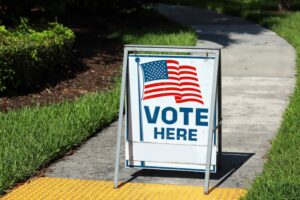
A recent New York Times article has shed light on how ultra-wealthy donors are increasingly using secretive nonprofits as a means of concealing money for political contributions. The questionable practice has allowed these individuals to send hundreds of millions of dollars to political action committees (PACs) without having to disclose where the money came from. Observers have noted that while using philanthropy for campaign donations is illegal, the exception given to some nonprofits has paved the way for billionaires to remain anonymous when it comes to political giving. As analysts have highlighted, troubling levels of “dark money” in politics is far from a new phenomenon, however, new election filings and fundraising documents have unveiled how prevalent the use of these types of shadowy groups to raise money on behalf of candidates has become. Over the past several presidential election cycles, the percentage of money donated to super PACs from organizations that did not disclose their donors has jumped significantly.
In the aftermath of the highly controversial 2010 Citizens United Supreme Court decision allowing unlimited independent expenditures in elections, many feel that it was inevitable for such a deceptive practice to take shape. While super PACs must publicly report their donors’ identities and the amounts that they contributed, in cases where money is donated first to a third party that later makes a PAC contribution, only the intermediary organization is required to be disclosed. This has created a loophole whereby these third-party entities can in many cases remain anonymous – allowing wealthy donors to hide political contributions via these types of groups. The increasingly used occurrence is of course problematic because it undermines public trust. Information regarding who donors are and where they get their money from should be available to the public so that they can make more informed decisions about which political candidates they decide to support.
The more commonplace nature of this, particularly within Democratic Party politics, can be seen through the tax records and internal fundraising documents of recent examples such as Our American Future Foundation, Future Forward USA Action, Evidence for Impact, and others. These groups supported Former President Biden and Former Vice President Harris in 2024, relying heavily on nonprofit donations to fund Democratic-aligned super PACs, which is a notable shift over the preceding years away from super PACs being largely dominated by conservatively-aligned nonprofits. The changing political climate matters because it shows that this kind of opaque fundraising is becoming increasingly prevalent among both parties. As more groups start utilizing these same strategies, it creates a system in which growing amounts of money are being spent to try to influence elections without voters really knowing who is behind it. Even if these organizations are technically abiding by the law in the aftermath of the Citizens United Supreme Court decision, this practice still goes against the idea that elections should be fully transparent and fair. If voters cannot track the sources where the money is coming from, it becomes harder to trust the messages behind some campaigns.
In recent electoral cycles, super PACs have even paid for major advertising campaigns, especially online and on television, and often focus on attacking opponents or boosting certain narratives. Even though they are supposed to stay independent from the candidates themselves, the reality is that their messaging often closely lines up with campaign goals. This makes it feel like they are more connected than they are supposed to be, even if there is no direct coordination happening. The use of dubious nonprofits as a way to move money into super PACs makes the issue even more concerning. These organizations can accept donations without having to publicly name who gave the money, which makes it easier for wealthy donors or special interest groups to stay anonymous and unknown. As a result of this, large amounts of money can influence and alter the course of elections without any real form of accountability. This can lead to situations where donors may expect influence or access in return, and even if that is not always the case, it still raises serious questions about the way in which it harms fairness and transparency.
Ultimately, this is not simply an issue about the exorbitant amounts of money being spent on elections, but how it is being hidden. When the contributors of these large sums are concealed, it elicits concern about who is really influencing political outcomes. The lack of transparency is detrimental to voters and thus requiring clear disclosure of donors would be a step toward making elections more equitable and reliable.

