
The National Interest Foundation Newsletter
Issue 331, April 24, 2026
Welcome to our NIF Newsletter. In this week’s edition, we delve into Israel’s illegal military occupation of dozens of villages in southern Lebanon and other violations of international law, provide analysis regarding the Virginia redistricting referendum and its potential implications, discuss the U.S.-Israel standoff with Iran continuing amid Trump’s constantly fluctuating position, and look at the massive scale of the U.S. budget deficit and the future problems anticipated.
Israel’s Illegal Military Occupation of Dozens of Villages in Southern Lebanon and Other Violations of International Law

Israel’s military occupation of at least 55 villages in southern Lebanon and other breaches of international law in the country have garnered criticism. The situation has raised critical questions regarding how these violate Lebanon’s territorial sovereignty and integrity, the laws of armed conflict, and the manner in which Israel has carried out its military operations. The number of internally displaced civilians in Lebanon has rapidly increased in recent months due to Israeli attacks and expanded ground operations. Israel’s military operations in Lebanon have prompted analysts to compare them to those carried out in Gaza during the preceding years due to the use of mass destruction of infrastructure, targeting of civilian areas, and forced displacement. Experts have labeled this as the “Gazafication” of Lebanon because of the strikingly similar tactics being applied in an effort to depopulate areas of southern Lebanon. The comparison has drawn global attention, with international figures like UN Secretary-General António Guterres warning that the humanitarian crisis caused by the continuous displacement and unlawful Israeli military actions risks fueling instability across the region.
The Israeli “yellow line” militarized zone, which encompasses dozens of Lebanese towns and villages, amounts to de facto occupation – with the continuous strikes and incursions serving as a violation of international law and Lebanese sovereignty. Within the zone, Israel has destroyed homes and targeted other civilian infrastructure, not to mention the mass level of forcible displacement this has caused for those living in the area. All of these are deemed war crimes under the Geneva Conventions. Reports in recent months indicate that Israeli strikes have damaged or destroyed close to 1,400 buildings, many of which are homes, schools, or medical facilities. Over 1.2 million people have been forcibly displaced as a result of this – roughly one-fifth of Lebanon’s population – creating a severe humanitarian catastrophe which has also seen more than 2,000 people killed, many of whom have been children. The crisis, characterized by widespread airstrikes and over 37,000 destroyed housing units, has overwhelmed emergency systems, forcing residents into overcrowded shelters or onto the street.
Exacerbating the scale of the current crisis is the fact that in recent years, Israel has repeatedly carried out strikes and attacks on Lebanon – even during times when these were supposed to be brought to a halt. The 2024 Israel–Lebanon ceasefire agreement, for instance, did not stop Israel from launching regular strikes – with UN agencies reporting that over 10,000 violations were documented within the first year following its implementation – largely attributed to Israeli air and ground incursions. This has prompted many to become increasingly critical of Israel’s destabilizing and unlawful military actions in Lebanon. In addition to the humanitarian crisis that they have caused, they have also decimated Lebanon’s economy, resulting in an estimated $15-$20 billion in losses and the destruction of critical state infrastructure – particularly in the agricultural south. The extensive damage to homes, roads, water, electricity, and telecommunications networks alone has left reconstruction needs estimated at over $11 billion.
Concerns that Israel’s military incursions and occupation in southern Lebanon could become a permanent one are mounting as well. The mass displacement of civilians from the south has led to fears of a foreseeable depopulated “no-man’s land” in the region. Israeli officials’ expression of an intent to not allow residents to return “until northern Israel is deemed secure” have been viewed as a blatant and vague attempt to create conditions for longstanding military occupation at the arbitrary whim of Israel itself. As proof of this, observers also point to Israel’s systematic and widespread destruction of infrastructure in southern Lebanese villages – actions carried out to leave these areas uninhabitable and nearly impossible for residents to return to in the future. As a result, world leaders from Canada, France, Italy, the United Kingdom and elsewhere have issued warnings against a prolonged Israeli occupation – highlighting its disastrous humanitarian consequences in addition to its likelihood to serve as a major impediment to peace and stability.
Ultimately, the Israeli patterns of systematic displacement and destruction of civilian infrastructure have led to increased scrutiny from human rights advocates, legal experts, and the international community. The scale and impact of these harmful Israeli military operations in southern Lebanon – as they did in Gaza – raise understandable questions about their true motives. They serve as a major obstacle to the prospects of long-term peace and stability, and should they continue, the chances of desirable political and diplomatic solutions remain increasingly unlikely.
The Virginia Redistricting Referendum and Its Potential Implications
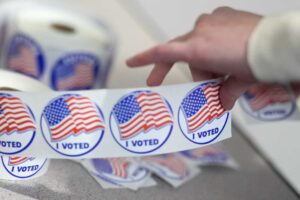
Virginia’s recent redistricting referendum has quickly become one of the most consequential state-level political developments ahead of the midterm elections. The measure, approved by voters by a narrow margin, temporarily shifts authority over congressional district maps from a bipartisan commission back to the state legislature, a move with immediate political and legal implications. Essentially, the referendum asks whether lawmakers should be allowed to redraw congressional districts before the next census under specific conditions. The ballot language framed the change as a way to “restore fairness” in upcoming elections, though that phrasing itself became a point of contention during the campaign. Supporters argued the change was necessary to respond to aggressive redistricting efforts in other states, while critics saw it as a clear example of partisan gerrymandering.
The newly proposed maps could shift the balance of power in Virginia’s congressional delegation, with projections suggesting Democrats could gain several seats if the maps are implemented – likely resulting in Democrats going from a narrow 6-5 advantage in U.S. House seats to a 10-1 advantage. In a closely divided U.S. House, even a small number of seats can have national consequences. Virginia voters had previously approved a bipartisan redistricting commission in 2020 as a way to reduce partisan influence in map drawing. The new measure effectively places that system on hold until after the 2030 census, raising questions about consistency and long-term governance. For some observers, the shift reflects a growing trend in which both parties are willing to abandon procedural reforms when they see a strategic disadvantage.
A state court has moved to block the implementation of the referendum results, siding with arguments that the process used to bring the measure to voters may have violated constitutional requirements. However, in response, Virginia Attorney General Jay Jones stated that the decision “should not override the will of voters,” signaling that the issue is likely headed for further appeals. This legal battle introduces a layer of unpredictability that could delay or even nullify the practical effects of the vote.
Some voters have expressed confusion over the phrasing of the ballot question itself, with reports noting that the wording and surrounding information made it difficult to fully understand the implications. National figures have also weighed in, including President Donald Trump, who criticized the referendum after its passage, calling the result “rigged” without presenting evidence, a response that mirrors earlier disputes over election outcomes. His reaction highlights how state-level electoral processes are increasingly tied to political agendas, particularly in an election cycle where control of Congress remains highly contested.
Looking ahead, if the new maps are ultimately implemented, Virginia could become a key example of mid-decade redistricting reshaping electoral dynamics. Other states may view this as a precedent, potentially leading to similar efforts elsewhere and further intensifying partisan competition over district boundaries. The controversy surrounding the measure may have longer-term effects on public trust. Frequent changes to redistricting rules, especially when driven by short-term political considerations, risk reinforcing perceptions that electoral systems are being manipulated.
For now, the situation remains unresolved. The referendum has passed, but its implementation is uncertain, and the legal process is ongoing. Even so, experts do contend that overturning a voter-approved referendum is highly unlikely. In the meantime, what is clear is that Virginia has moved to the center of a national debate over how elections are structured and contested, following similar cases in other states such as Texas and California. Whether this moment leads to further redistricting battles elsewhere remains to be seen, but it is the latest high-profile instance in an ongoing cycle of them that may very well continue.
U.S.-Israel Standoff with Iran Continues Amid Trump’s Constantly Fluctuating Position

Earlier this week, U.S. President Trump announced an indefinite extension of the Iran ceasefire – just hours before it was set to expire. The decision was made to purportedly allow for ongoing peace negotiations and to give Iran more time to provide a “unified proposal,” despite Trump making previous statements indicating that he would not move the deadline. The uncertain state of peace talks was evident on Tuesday when U.S. Vice President JD Vance was slated to travel to Pakistan for a second round of negotiations but canceled due to Iran’s failure to confirm their participation in them. To many observers, the ceasefire extension amid all of this suggests that both sides are attempting to avoid renewed direct confrontations, though the situation remains highly volatile and fragile. Analysts have also argued that the extension indicates that the United States and Iran seek to manage the conflict through other means, such as ongoing naval blockades and economic pressure. Mediators such as Pakistan have framed the ceasefire extension as necessary in order to keep the channels for negotiations open and avoid renewed fighting, despite the status of talks being in limbo amid conflicting signals from both sides.
The future of any talks remains highly uncertain and there is no set date to resume negotiations. Complicating this further is the fact that Iran has repeatedly stated it will not come back to the table unless the United States lifts its blockade. This demand continues to be a major sticking point, as the Trump administration views the blockade as one of its primary tools of leverage against Iran. As such, many believe that both sides have reached a stalemate which further hinders any prospects of a diplomatic resolution. In the midst of the deadlock, both the United States and Iran have seized tankers and commercial vessels in international waters, particularly around the Strait of Hormuz and the Indian Ocean – as a part of their ongoing maritime standoff. These actions reflect the strategies that both sides are trying to use to assert control over specific shipping routes without prompting the resumption of a full-scale conflict. The Strait of Hormuz remains an incredibly vital area for global oil supply, making any disruption there significant.
Amid these ongoing tensions between the United States and Iran, there is also growing evidence of internal strain within the Trump administration. This week, U.S. Secretary of War Pete Hegseth fired Navy Secretary John Phelan, with indications that his dismissal occurred because of slow progress with shipbuilding reforms and his deteriorating relationship with Hegseth and Trump over the matter. The timing of this decision has been criticized, given that the Navy is actively involved in blockading the Strait of Hormuz. Furthermore, it highlights political uncertainty and high levels of dissent within the chain of command. This internal instability raises concerns about how effectively the U.S. can even sustain operations if their leadership is constantly being disrupted. It also adds to growing skepticism internationally, especially after Trump moved forward with the strikes on Iran despite no approval from Congress or NATO allies. With many senior advisors now being replaced, this casts further doubt over the Trump administration’s war strategy and illustrates the significant levels of discontent and opposition to this – even among officials within the administration itself. Combined, these issues present a perception that U.S. strategy is dubious and inconsistent, reinforcing legitimate doubts about the motives and objectives behind U.S. military actions against Iran and the long-term plan moving forward.
Overall, critics of the Trump administration’s actions in Iran have warned that the current state of affairs creates a dangerous strategic limbo phase. The ongoing Strait of Hormuz standoff combined with the continued presence of U.S. naval forces in such close proximity to Iranian shores remains a constant flashpoint for potential escalation. This has prompted many to contend that the ceasefire extension is less a de-escalation and more a recalibration of pressure that leaves the situation susceptible to renewed direct hostilities and conflict. It has been compared to a high-stakes waiting game whereby both sides leverage economic and military pressure in an effort to force concessions from the other and it remains to be seen how things play out moving forward.
The Massive Scale of the U.S. Budget Deficit and the Future Problems Anticipated

Concerns over the trajectory of the United States federal budget deficit are intensifying, as policymakers and analysts warn that current fiscal trends may pose long term economic risks. Recent estimates now place the annual deficit at roughly $1.9 trillion, with projections suggesting it could rise above $3 trillion in the coming years. As deficits persist year after year, total debt continues to grow, increasing the cost of servicing that debt. Interest payments are now taking up a larger share of federal spending, a trend that is expected to accelerate if borrowing continues at its current pace. Analysts at organizations such as the Brookings Institution have pointed to rising interest rates as a key factor driving this dynamic. As rates increase, so does the cost of borrowing, creating a cycle in which higher debt leads to higher interest payments, which in turn contribute to further deficits.
This cycle is being reinforced by broader fiscal priorities. Defense spending remains elevated, reflecting ongoing global tensions and security commitments. While such expenditures are often viewed as essential, they add to the overall budgetary burden, particularly when combined with rising interest obligations. Over time, this can limit the government’s flexibility, reducing its capacity to allocate resources toward other priorities without increasing borrowing. Economists have raised concerns that large and growing deficits can crowd out private investment. When the government borrows heavily, it can absorb capital that might otherwise flow into the private sector, potentially slowing business expansion and innovation. This effect may not be immediate, but over time it can weigh on economic growth and productivity.
Market stability is another area of concern. High levels of debt can contribute to volatility, particularly if investors begin to question the sustainability of fiscal policy. While U.S. government debt has long been viewed as a safe asset, shifts in perception could lead to changes in demand, affecting interest rates and financial markets more broadly. Even modest increases in volatility can have ripple effects across the economy, influencing everything from mortgage rates to business investment decisions.
There is also a concern regarding how high debt levels affect the government’s ability to respond to crises. In periods of economic downturn or emergency, fiscal flexibility becomes critical. Governments often rely on increased spending or targeted interventions to stabilize the economy. However, when debt is already elevated, the scope for such responses may be more limited. This can create difficult tradeoffs, particularly if policymakers are concerned about adding to an already substantial debt burden. Recent economic conditions have added to these challenges. Inflation and higher interest rates have already tightened financial conditions, making borrowing more expensive across the board. At the same time, global uncertainties, especially political tensions, are contributing to an environment of heightened risk.
While deficits have often been treated as abstract figures, their effects are becoming more visible through rising interest costs and their impact on federal priorities. As more of the budget is directed toward servicing debt, there is less room for discretionary spending, a shift that can influence policy debates and political priorities. Potential solutions often involve difficult choices, including adjustments to spending, changes in tax policy, or a combination of both. Each option carries economic and political implications, making consensus difficult to achieve. At the same time, delaying action may increase the scale of the adjustments required in the future.
Looking ahead, the trajectory of the U.S. budget deficit will depend on a range of factors, including economic growth, interest rate trends, and policy decisions made in Washington. What is clear is that the current path is drawing increased scrutiny from economists and policymakers alike. The combination of rising debt, higher interest costs, and limited fiscal flexibility is creating a situation that many view as increasingly difficult to sustain. As deficits continue to accumulate, their effects become more deeply embedded in the economy. Whether policymakers choose to act now will play a significant role in determining how these challenges unfold.

