

The National Interest Foundation Newsletter
Issue 332, May 1, 2026
Welcome to our NIF Newsletter. In this week’s edition, we discuss how the State Department has openly admitted that Israel pushed the U.S. into the Iran war, look into Syria beginning its first public trial of Assad-era officials charged with crimes against the civilian population, examine the growing opposition to American taxpayers funding weapons sales to Israel, and provide analysis on the United Arab Emirates’ (UAE) decision to leave the Organization of the Petroleum Exporting Countries (OPEC) and what that means for the oil cartel.
State Department Openly Admits That Israel Pushed the United States into the Iran War
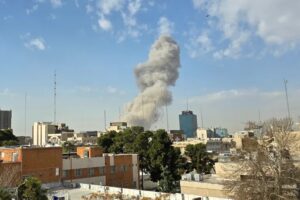
Earlier this week, the legal advisor for the State Department, Reed Rubinstein, affirmed the already existing belief that the United States entered the Iran war on behalf of Israel. The admission directly contradicts statements from the White House and President Donald Trump – which have repeatedly insisted that Israel did not have anything to do with the decision to initiate the conflict. The revelation comes as largely unsurprising to many, not only because of the widespread suspicion of it being the case, but also due to Israel’s continuous attempts over the years to drag the United States into a war with Iran. The confirmation has exacerbated concerns over the nature of the relationship between the United States and Israel, and the troubling degree of influence that the latter wields over American military and foreign policy decisions.
One of the primary areas of significance surrounding the State Department’s legal memo lies in its direct contradiction of the narrative maintained by President Trump. Throughout the escalations and initiation of the conflict, Trump has repeatedly insisted that the United States acted independently, driven by its own strategic calculations. Following the outbreak of direct hostilities, the president took to Truth Social to assert that “Israel never talked me into the war with Iran,” yet the State Department’s legal filing frames the conflict not as a unilateral American endeavor, but as an operation legally executed “at the request of” Israel. By citing communications previously sent to the UN Security Council as evidence of this connection, the State Department effectively anchored the legal continuity of the war to Israeli interests. This disparity between the White House’s public posture of absolute sovereignty and the State Department’s legal reality exposes a fractured messaging strategy within the Trump administration.
The disclosure by the State Department adds weight to investigative reporting detailing the run-up to the conflict. Reports from outlets like The New York Times indicated that a critical turning point occurred during a mid-February Situation Room meeting involving President Trump, Israeli Prime Minister Benjamin Netanyahu, and senior officials from both governments. Analysts suggest that Prime Minister Netanyahu leveraged a sustained pressure campaign to secure direct American military involvement. Critics of the administration argue that this represents a dynamic where the U.S. was essentially backed into a corner. Even Secretary of State Marco Rubio alluded to this in earlier remarks to reporters, noting that an anticipated Israeli action against Iran would inevitably precipitate retaliatory strikes against American forces, leaving the U.S. with perceived “pre-emptive” choices. This dynamic has led to intense criticism from observers, who argue that the U.S. allowed its military hand to be forced by a foreign entity’s interests.
The admission that the United States is fighting a war requested by a foreign government carries heavy strategic and domestic consequences. For an administration that campaigned on avoiding drawn-out foreign entanglements and putting “America First,” fighting a costly, unpopular, and questionable regional conflict at the behest of another nation severely damages political credibility. In doing so, the U.S. has adopted Israel’s maximalist position towards Iran, becoming entangled in a potentially protracted conflict with no clear goals, objectives, or exit strategy. Furthermore, U.S. and Israeli intervention in Iranian affairs is unlikely to produce positive outcomes, and on the contrary, could lead to major instability and the creation of a regional humanitarian crisis.
Moving forward, the State Department’s revelation will likely serve as a central piece of evidence for those demanding a fundamental recalibration of how the United States defines its national interests abroad. The memo serves as alarming evidence that the U.S. can be swayed into making major foreign policy decisions that are detrimental to its own best interests at the behest of external forces. Thus, many contend that it should be a wake-up call regarding how dangerous it is to allow an outside entity to exert this much influence. Aligning so closely with a foreign government that has received high levels of international criticism for its actions, particularly in recent years, is damaging to the United States’ credibility as a global champion of peace and human rights. Ultimately, the proof that American military action against Iran was driven by outside forces raises serious concerns about the manner in which the Trump administration is carrying out its foreign policy decision-making process.
Syria Begins Its First Public Trial of Assad-Era Officials Charged with Crimes Against the Civilian Population
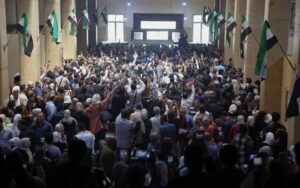
The first trial addressing the crimes committed by officials during the Assad regime era began earlier this week, marking a pivotal moment in Syria’s transitional period and post-Assad recovery. Following decades of repressive rule and nearly 14 years of conflict that left hundreds of thousands dead and many more imprisoned or missing, observers view this as a step in the right direction towards accountability and reconciliation. It also provides the new Syrian government with the opportunity to establish rule of law and other forms of legal precedence for the future. As such, many Syrians see the act of holding a public trial as highly significant and one representing progress – signaling that the country is ready to confront its past and adapt from it. For years under Assad, the international community and Syrian civil society documented systemic atrocities – ranging from arbitrary detentions and enforced disappearances to widespread torture and chemical attacks – which were carried out with absolute impunity. Thus, the initiation of these domestic proceedings also offers a chance for genuine and critical national reconciliation.
To understand the significance of this development, one must first consider the sheer scale of the human rights violations that defined the Assad era, particularly since 2011. Under the government of Bashar al-Assad, state security apparatuses operated with carte blanche to suppress dissent. Hundreds of thousands of civilians were swept into a vast network of clandestine prisons, where torture was used systematically. Until recently, international efforts to hold high-ranking Assad era officials accountable were largely restricted to foreign courtrooms under the principle of universal jurisdiction. Landmark trials in countries like Germany and France provided a measure of justice, but they were physically and culturally removed from the victims. However, a public trial within Syria, targeting those who orchestrated and executed these crimes, brings the judicial process directly to the society that suffered the abuses and violations.
The main defendant of the first public trial that commenced this week is Atef Najib, the former head of security in Daraa and a cousin of Bashar al-Assad. Najib is accused of crimes against humanity, including the torture and killing of protestors during the early days of the 2011 uprising. One of the most infamous incidents tied to his leadership was the arrest and torture of several teenagers after they had written anti-government graffiti on a school wall, an event widely recognized as the spark that helped start the Syrian revolution. Addressing such a significant event in history is important because it acknowledges the emotional weight and suffering Najib and other Assad era officials caused, while also recognizing their actions as crimes. For years, victims of the Assad regime endured abuse and injustice, and government officials faced no consequences for their actions. The fact that Najib was arrested in January 2025 shortly following the collapse of the Assad regime demonstrates a notable shift and shows that the country’s new leadership is willing to address the long-standing concerns the public has – which will help restore their trust in the government. Prioritizing public trust early on is also important for Syria’s new leadership because it will set the tone for how justice is handled in the future.
Transparency is essential at this time, especially during the trials, because it reassures Syrians that justice is being pursued fairly. The proceedings are being made public to the international community from the Palace of Justice in Damascus to make sure this happens, and to legitimize the process. This openness is regarded as a major shift toward credibility, helping ensure that the trials are not an act of revenge, but an effort to uphold justice and human rights. This level of transparency is also good for international cooperation because it lets Syria be vulnerable and accountable for how they conduct the trial. It may also encourage international legal organizations and human rights groups to support Syria’s judicial process, further strengthening its legitimacy and providing legal oversight that might help prevent corruption. Human rights activists also hope that it will create a vital deterrent effect – sending a clear message to current and future officials that the documentation of abuses will eventually bear fruit in a court of law.
Looking ahead, the next upcoming hearing scheduled for May 10 will include testimony and investigations regarding prominent figures from the Assad era regime. Expanding the range of these trials will make their impact more significant and allow for greater reconciliation because the full scale of injustice the Syrian people faced will be aired. By holding multiple figures accountable, rather than focusing on one individual, the Syrian government can show that their decisions are being applied fairly across the board. Over time, this approach to justice can help the nation heal and will reinforce the idea that this new Syria is committed to breaking the cycle of repression, human rights violations, and violence imposed by the previous regime.
Growing Opposition to American Taxpayers Funding Weapons Sales to Israel
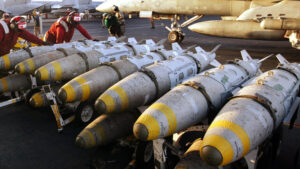
More citizens in the United States are starting to become aware of how much military support the government sends to Israel, especially because of the recent war in Gaza. In light of undeniable evidence of these weapons being used to commit war crimes and human rights violations, many within the U.S. have grown increasingly concerned about where the money is going, the manner in which it is being used, and why it is being spent this way in the first place. Over the preceding months, Congress has approved additional aid packages worth billions of dollars on top of existing commitments, bringing renewed attention to the scale of support and growing unease regarding it.
The United States provides Israel with billions of dollars annually through programs authorized by Congress, most notably Foreign Military Financing (FMF). Under a 10-year agreement signed in 2016, Israel receives about $3.8 billion per year in military assistance. Through this structure, funds are allocated by the U.S. government but are largely required to be spent on American made defense equipment. In practice, this means that money does not move freely as cash in the traditional sense. Instead, it functions as a designated pool of funding that Israel uses to purchase weapons systems, ammunition, and related military technology from U.S. defense contractors, including items such as precision guided munitions and missile defense systems. Since the funds are directed toward American manufacturers, supporters argue that the program benefits the domestic economy, with a large share of the funding returning to U.S. companies through defense contracts. However, this explanation has not prevented criticism from gaining traction, particularly as awareness of the mechanics behind the system has grown.
Some of the frustration is the perception that taxpayer dollars are being directed outward at a time when many domestic needs remain unmet. Critics argue that funds allocated for foreign military assistance could instead be used for infrastructure, healthcare, or other priorities within the United States. The scale of spending has become part of this debate, as the U.S. has provided Israel with well over $100 billion in total aid since its founding, much of it in military support. As public understanding of how these programs operate has expanded, so too has concern about how resources are being distributed. The debate has become more intense in light of the Gaza war. Reports and images from the conflict have led many Americans to question how U.S. supplied weapons are being used and whether their use aligns with their own values. For some, the issue is not only financial, but moral as well. The concept that U.S. funded equipment could be involved in civilian harm has contributed to protests, public statements from advocacy groups, and increased pressure on elected officials, with demonstrations drawing thousands of participants in major cities.
Due to this, a rapidly growing movement of American taxpayers is now actively opposing the use of their tax dollars to fund these weapons transfers. Driven by rising humanitarian concerns, shifting generational and political demographics, and an increasing desire to prioritize domestic needs, this opposition represents a significant shift in the American political landscape. The primary catalyst for this growing opposition is the catastrophic humanitarian toll of recent conflicts in the region, particularly the war in Gaza. As graphic images of civilian casualties, destroyed infrastructure, and displaced families flood social media and news outlets, a growing number of Americans are drawing a direct line between their tax payments and the war crimes and human rights violations being carried out abroad. Thus, for many taxpayers, the issue has become a matter of moral complicity. They argue that by providing precision-guided bombs, artillery shells, and tactical vehicles, the United States is not merely a passive observer but an active facilitator of actions that international human rights organizations have heavily criticized. This moral awakening has galvanized a diverse coalition of religious groups, human rights advocates, and everyday citizens who demand that American foreign policy reflect basic humanitarian values and international law.
Adding to the opposition is a wave of public frustration fueled by recent reports exposing the financial mechanics of these transactions. While public and political discourse traditionally frames these transfers as “weapons sales,” investigative analyses have increasingly revealed that the term is largely a misnomer. In reality, American taxpayers – rather than the Israeli government – are directly footing the bill for the vast majority of these arms. Under the aforementioned FMF, the U.S. government provides billions of dollars in military grants to Israel, which are then used as a virtual “gift card” to purchase advanced weaponry from U.S. defense contractors.
The shift in public sentiment is reflected in demonstrations across major cities, as well as in growing calls within Congress to reassess the terms of military assistance. Some lawmakers have pushed for conditions on aid, including requirements related to human rights or limitations on how weapons can be deployed. The structure of the aid itself plays an important role in shaping this debate. Because the funding is tied to specific purchases from U.S. companies, it creates a system that is both international and domestic in its effects. On one hand, it enables Israel to maintain a high level of military readiness, including access to advanced systems such as missile defense programs that cost billions to develop and maintain. On the other, it channels federal spending into a particular sector of the U.S. economy. These impacts make the policy more complex than a simple transfer of funds, and more difficult to evaluate in purely financial terms.
Public awareness of these details has increased in part due to media coverage and advocacy efforts that aim to explain how the system works. As more people come to understand the connection between federal spending decisions and military operations abroad, the political stakes have risen. What was once a niche policy area is now being discussed in broader conversations about government priorities and accountability. Some policymakers have acknowledged the growing concerns and signaled openness to reviewing current policies. Others have maintained that existing arrangements are essential for maintaining stability in a volatile region. What is clear now is that the issue has moved into the public spotlight in a way that it has not in previous years. As more Americans engage with the details of how military assistance is funded and delivered, the conversation is becoming more detailed, more contested, and more consequential for future policy decisions.
UAE Leaves OPEC and What That Means for the Oil Cartel

The decision by the United Arab Emirates (UAE) to leave the Organization of the Petroleum Exporting Countries (OPEC) represents one of the most significant shifts in international energy policy in recent years. Following decades as a core member, the UAE is stepping away from a system designed to control oil supply and influence prices, choosing instead to act independently at a moment when global energy markets are under immense strain. The primary reason behind the move is control. OPEC membership requires countries to follow production quotas, and for the UAE, those limits had become increasingly restrictive. The country has the capacity to produce close to 4.8 million barrels of oil per day, yet it has often been producing closer to 3 to 3.4 million under OPEC agreements. By leaving, the UAE is no longer bound by these caps and can move toward its stated goal of reaching around 5 million barrels per day by 2027.
There is also a timing element driving the decision. The ongoing conflict involving Iran has disrupted global oil flows, especially through the Strait of Hormuz, which normally carries a significant share of the world’s energy supply. In this environment, high prices have created an incentive for producers to maximize output and capture revenue while demand remains strong. Analysts note that the UAE is trying to take advantage of this moment rather than remain constrained by collective limits. The consequences of the move are likely to be felt most clearly over time rather than immediately. In the short term, supply is still affected by regional disruptions, meaning the UAE cannot instantly flood the market even if it wants to. However, the longer-term outlook is where the real impact begins to take shape.
OPEC has historically functioned by aligning output decisions across its members to stabilize prices. With the UAE – one of its largest and most flexible producers – no longer formally participating, that coordination becomes harder to maintain. Over time, this could reduce the group’s ability to manage supply in a predictable way. If the UAE begins to raise production while other countries follow their own strategies, the market could shift from coordinated control to competition. In one scenario, this could lead to oversupply, especially if production ramps up after current shipping disruptions ease. Analysts have warned that such a shift could push prices downward after the current period of elevated costs.
At the same time, there is also the possibility of price swings in the opposite direction. If coordination weakens and geopolitical tensions continue, markets may react more sharply to disruptions, leading to spikes rather than stability. The key issue is not simply whether prices rise or fall, but that they may become less predictable. Another major question is how other OPEC members respond. The UAE’s departure highlights tensions already existing within the group, particularly between countries that want to expand production and those that rely on higher prices to support their economies. There is growing speculation that other members could reconsider their positions if they feel similarly constrained. Even if no immediate exits follow, the precedent has been set, and that alone could weaken the organization’s long-term cohesion.
Saudi Arabia’s response will be especially important. As the leading force within OPEC, its strategy often shapes the direction of the group. If Saudi Arabia chooses to maintain strict production discipline, it could attempt to preserve stability. If it instead increases output to compete with the UAE, it could trigger a more aggressive market environment where producers prioritize market share over price control. There are also implications for global energy markets beyond oil. Increased production from the UAE could place downward pressure on energy costs, which would benefit importing countries and potentially ease inflation in the long run. At the same time, lower prices could slow investment in alternative energy sources by making fossil fuels more economically attractive in the near term.
For the UAE itself, the move represents a shift toward independence in energy policy. It allows the country to respond more quickly to market conditions and align production with its own economic strategy rather than group decisions. At the same time, it also means taking on greater risk. Without the support of a coordinated system, the UAE is more exposed to price swings and market uncertainty.
In the coming weeks and months, the most important factor will be how quickly production actually increases and how other producers react. If output rises gradually and coordination continues informally, the transition may be relatively stable. If competition intensifies and multiple producers move to expand supply at the same time, the result could be a more unstable oil market with sharper cycles of high and low prices. The UAE’s exit is not just a single policy change, but the start of a new phase in how oil markets operate. Only time will tell whether this leads to greater flexibility and competition or a more fragmented and unpredictable system.

